Tuesday, January 06, 2015

Good Songs I


Funky Cold Medina – Tone Loc
One – Metallica
Cult of Personality – Living Colour
Welcome to the Jungle – Guns N’ Roses
Rock N Roll All Nite – Kiss
Rocket – Def Leppard
Nothing But a Good Time – Poison
Way Cool Jr. – Ratt
Girls Ain’t Nothing But Trouble – DJ Jazzy Jeff and the Fresh Prince
Devil Inside – INXS
Wild Thing – Tone Loc
I Love it Loud – Kiss
Animal – Def Leppard

A few weeks ago I was at my parents’ house in Amesbury when I stumbled on a cache of old tapes – correction, it was a cache of old MIX tapes. Because I tend to be a completest (though my wife might call me a hoarder), just about every mix tape that I had ever made was in that collection.—there are 27 volumes*. I thought this discovery was noteworthy, so I did what people like me do in these situations; I snapped a photo of the tapes, posted it on my Facebook wall and made snide comments about musical tastes.

* If you don’t know what a mix tape is, it’s pretty simple. Back in the stone age (the 1980s and 90s) people listened to music four ways: radio, record (which was becoming irrelevant), CD (which—at the beginning of the 90s—were for the rich) or cassette tape (the choice of most people I knew). To put it bluntly, there was a lot of garbage on every tape so waiting to listen to your favorite song was torturous and fast forwarding was a pain. No one wanted to spend all day sitting by the radio hoping their favorite song would be spun. Much like today, people wanted control of their media.

Thus was born the mix tape.

You could tape a whole bunch of different songs off the radio, records, CDs and tape onto a blank cassette tape that usually cost less than five bucks. It was portable – you could listen to it in your Walkman or in your car. If you liked a girl, you gave them a mix tape of a bunch of slow songs and hoped that she didn’t laugh when she played it. I wasn’t courageous enough to do something like that, so the vast majority of my mix tapes are songs that I liked and would be played ad nauseam. So much so that when I hear a song that I had on a Good Songs tape played on the radio or at a concert, I expect to hear the next good song to be played after it.

I think that I once heard two good songs in a row on the radio, I bragged about it all day.

A few weeks went by and my friend Shawn said that I should turn the tapes into a playlist, which seemed like a great idea. A few weeks after that, my friend Ryan suggested that I listen to the playlists and write about them. That seemed like an even better idea.

This morning I opened iTunes and populated a new playlist (cleverly titled “Good Songs I”) with the songs above and listened to them while I did my normal morning routine. Some of these songs I haven’t heard in decades and I certainly hadn’t  listened to them in the order of the original mix tape. The experience was interesting as I juxtaposed my tastes from 1989 (this tape was made, I think, in the spring of 1989) to what I’m currently faced with with now: adulthood, being a husband, fatherhood, changing cultural mores.

For instance, I don’t think that Tone Loc could have had a hit with a song about a drug that causes women to black out and his comical inability to rape them, like he did with “Funky Cold Medina”. His gay panic declaration, “This is the 80s and I am down with the ladies” also comes off a little desperate too. But Tone Loc was right about one thing, it was the 80s and this sort of thing was condoned and maybe a bit encouraged. Plus there was a shout out to the dog mascots on beer companies that were inexplicably popular back then (Spuds McKenzie, Alex from Stroh’s – is Stroh’s still around any more?).

I was most embarrassed by two tracks on the tap:  Ratt’s “Way Cool Jr.” and the Fresh Prince’s “Girls Ain’t Nothing But Trouble. You may not remember it, but GANBT is a fairly harmless song that also uses rape as a punch line (what a fun time for the ladies!) over the “I Dream of Jeanie” TV theme song. Even though GANBT was featured on the album before “Parents Just Don’t Understand”, it was rereleased after that song became gigantic and rerecorded to reference that song and a song about “A Nightmare on Elm Street” (this was actually their second single, but New Line Cinema sued them over character infringement and it was recalled) at the end.

Today, we’d call this a blatant cash grab and I would guess that this isn’t the video Will Smith shows Jaden when he’s teaching him to become multitalented. Though, to be fair, if my date caused me to miss a RUN DMC concert because she was doing her hair, I’d be steamin’ like a demon too. That’s an important lesson for the kids to learn.

When I made this mix tape, I knew that Ratt’s “Way Cool Jr.” was the weak link of this track list. I jumped on the Ratt bandwagon way too late—I didn’t own their only good album “Out of the Cellar”—but I bought “Reach For the Sky” where WCJ is found. I really, really tried to like (I even bought a Ratt poster) the song, the album and the band but it was all so terrible. Listening to that song again only drives that point home, it’s an awful song trying to build some sort of bluesy mythology that had a horn section and a saxophone solo.

As a kid I knew that Ratt was a lot of things, but Memphis blues wasn’t one of them. Someone probably told them that their next album had to be more serious and this is what they came up with. I don’t know whether that’s sad or laughable.

I remember being \ afraid of Metallica when I was a kid. Who were they? Why weren’t they on MTV? Why did they play so fast and sing so aggressively? What was their deal? So I’m sure that I was extremely proud that I put this song on their – even though it’s the single for their first video that was on MTV and it was played in heavy rotation.

This might be the only time in recorded history where this comparison may be made, but like “Reach for the Sky”, I tried really hard to get into “ … And Justice For All”, but I failed miserably. It was way too fast for my taste and coming from a place where I only listened to Weird Al and Huey Lewis just two years prior; loading this into my Walkman and hitting play was a bit like going from the Amesbury PONY League to playing Michael Jordan in HORSE. Yes, I know that I mixed sports metaphors there, but “… And Justice For All” almost broke my brain.

The one other thing that I found interesting about this tape is that there is a bit of nostalgia nestled in it. I hated middle school, it was the most confusing and frustrating time in my life, and every second that I was in school seemed like forever. I didn’t have a lot of friends, I was awkward and goofy, I was slammed up against a brick wall by a girl (and it hurt – badly), everything I thought I knew and liked was completely out of sync—in short, I didn’t know who I was yet.

The only thing that I liked about junior high was our Spanish class trip to Montreal (yeah, don’t ask). The two songs that I remembered most from that trip were “Welcome to the Jungle” and “Devil Inside”. I thought that both songs were by dangerous bands (in the Satanic Panic hey day of the 1980s, any band that sang about the Devil may have been dabbling in the black arts) but I really dug the sounds and bought both tapes by the end of the year.

Depending on your thoughts about your lead singers dying while masturbating and making self-indulgent, incredibly boring videos, both bands were as dangerous as cream cheese. However, listening to them on this playlist brought me back to being on a school bus with 40 other stupid, awkward, lonely and confused kids wondering why we all (barely) spoke Spanish and were heading to the Frenchest place in North America. It was the one respite in three years of trash.


Finding that respite and holding onto it is what a mix tape could do for you.

Sunday, December 21, 2014

A New Project


Hello again. It's been awhile, I know. I have a new project that I think might actually turn out to be interesting, so let's talk about that and not worry about where I've been for the past 20 months.

A few weeks ago I went to my parents house and found a few old boxes of mine in the basement. In one of the boxes was a collection of 26 cassette tapes that contained mixes that ran the gamut of my freshman year in high school through a few years following college graduation. I've taken the contents of those mix tapes and turned them into iTunes Playlists. During the course of the next few weeks I will write down the thoughts that come to me as I listen to those playlists.

 I'm not exactly sure what will come of it, I hope that it will be interesting but we'll have to see. The holidays arrive in a few days, so this probably won't kick off until 2015. Until then ...

Monday, April 08, 2013

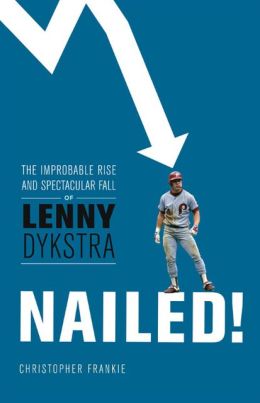
Nailed!

When reading “Nailed!: The Improbable Rise and Spectacular Fall of Lenny Dykstra” by Christopher Frankie, a one-word question bounced through my head: Why?

It’s never easy to work for a boss who is uncompromised and inconsistent, but when that boss was one of your childhood heroes, it becomes even more difficult to leave your position. And this is what Frankie found out in his short-term employment to one of baseball’s most popular players, Lenny Dykstra.

As a centerfielder for the New York Mets and the Philadelphia Phillies, Dykstra brought a combination of intensity and grit to every game he played in. He may not have been the most talented ballplayer, but he got the most out of his abilities through hustle, hard work and as the reader finds out in this book, some PEDs.

When Dykstra left the game, there was no one who thought that he had the brains to enter the working world. Most thought that he’d end up a coach somewhere, living off his name and past glories. However, Dykstra had other ideas; he was going to buy and run upscale carwashes in his native Southern California.

Once those businesses turned a profit, Dykstra sold out and began dumping his money into the stock market—specifically in stocks that he had chosen. According to Frankie, Dykstra spent an entire year immersing himself into the world of high finance and came out with an understanding of that world and a system for choosing stocks. His acumen for picking winners was so great that he began to attract the attention of prominent Wall Street analysts like Jim Cramer.

It’s here where the book picks up as Frankie was hired by Dykstra to work on his columns and newsletters for a financial publishing company. Not only that, but Frankie was given the title of Publisher (despite being in his early 30s at the time) of Dykstra’s new magazine venture. Called “The Player’s Club”, this periodical was aimed at professional athletes and had articles tailored to their lifestyles: when and how to retire, procuring a private jet, preparing for life after the applause ends. It was an ambitious project that definitely filled a niche, but Dykstra was too erratic to make it work and his mini-empire began crashing down on him.

Unfortunately for Frankie, he was part of the collateral damage. Late night phone calls from a barely coherent Dykstra, midnight meetings that lasted until dawn, screaming, caterwauling, charges of blatant racism and sexism were some of the trials that Frankie had to endure. Despite telling everyone that buck stops with him, Frankie alleges that Dykstra never took responsibility for his mistakes, stole money from his employees (when he decided to pay them) and was a general loathsome individual to be around. Midway through his partnership with Dykstra it finally dawned on Frankie that Nails (as Dykstra was known in baseball) maybe wasn’t the right star to attach his wagon.

I had followed this story pretty closely when it broke, so I had a good idea of the things that Dykstra did and the shop that he ran, however “Nailed!” goes into deeper detail about the travesty of working for Mookie Wilson’s former platoon partner.

About mid-way through the story I found myself muttering the one-word question that I referred to in the opening paragraph, “Why?” Why did Frankie stick around this long? Why couldn’t Frankie understand that Dykstra was using him and pretty much everyone he ever came in contact with? Despite dealings with countless people who were burned by Nails in the past, why did Frankie think that it would be different with him?

And to be fair, Frankie does address these questions. It seems that there’s a bit of hindsight spin on his part, but it’s understandable. The basic gist is two-fold: Dykstra owed him a ton of cash (for his work, Frankie never let him borrow his credit card, like other employees) and he felt that he owed the people whom he brought into Dykstra’s operation. On the last point, he didn’t want to leave anyone in this morass of insanity. And to his credit he was able to recoup a portion of his owed wages and help the other two members of the Dykstra staff (which numbered two by the end of the year) to escape with some cash.

The one thing that I found most interesting about this book is that despite Frankie being mistreated and taken advantage over and over again, there is still a shred of him that looks up to Dykstra. Whether it’s the even hand of a good journalist or someone feeling the lingering effects of Stockholm Syndrome, Dykstra isn’t portrayed as someone who is all bad. To me, that would be the biggest difficulty to writing this book and Frankie does a nice job of showing not only the detestable things that Dykstra would do, but also some of the reasons why a person would put up with this crap. Like most con men, Dykstra has a healthy amount of charisma that charm folks that don’t know him very well. It’s only after one has been caught up in the Dykstra web then does the real personality show.

Aside from Dykstra’s Girl Friday, known as Dorothy, is the most compelling character in this passion play. As someone who has been with Nails since the beginning of his business forays, she has seen him at his best and his worst. And despite treatment that borders on violations of Geneva Treaty, she keeps returning to him. She acted as Frankie’s Yoda and helped him navigate through the first few months of Lenny’s insanity.

For his first book, Frankie did a really good job. “Nailed!” was a quick read but at the same time made it impossible to put down. After a few books that didn’t live up to expectations, it was nice to find a tome that not only lived up to its billing but surpassed it. If you’re a fan of baseball, get the book. If you’re interested in just how screwed up our financial climate is and who we listen to in order to get rich, get the book.

You won’t be disappointed.

Wednesday, March 06, 2013

The Top Second Banana: AC Slater vs. Dylan McKay

Two years ago I wrote a Blog entry that was the most popular entry I ever wrote. In it I compare 90s titans Brandon Walsh (Jason Priestly) from “Beverly Hills 90210” to Zack Morris (Mark-Paul Gosselaar) from “Saved By The Bell”. We all had a good laugh when Brandon squeaked by with a 8-7 win over Zack. Now we’re going to do this all over again with a sequel that won’t be derivative at all and have the second bananas take center stage as Luke Perry and Mario Lopez will fight over who can be the greatest second-best man.

* My initial thought was to have a girls of 90210 and SBTB battle, but I haven’t been able to figure out what to do with the 800-pound gorilla in the room, also known as Andrea Zuckerman. If I include her that destroys the 90210 gang because she was a terrible character. But if I don’t include her, then we’re missing something aren’t we? And before you ask, no I will not compare Screech to David Silver because that’s pathetic and there is no comparison to be made to 1990s superman Steve Sanders.

You will notice that there is another really good picture of Tiffani Amber Thiessen at the top of this post because, you know, she’s hot and I’d rather stare at her than Luke Perry or Mario Lopez.

I’m going to use some of the same categories that I used in the previous post, but there will be some surprises. The same rules apply: for the most part these categories will only be judged on stuff that happened to these characters when they were in high school, though I do reserve the right to throw that rule out the window if I have a chance to make a cheap joke.

Height: Do you know that Mario Lopez (AC Slater) is 5’11”? It’s true, at least according to the Internet. And Luke Perry (Dylan McKay) is a Lilliputian 5’9”. Between Perry and Priestly (who was 5’8”) it’s no wonder why the 90210 male leads didn’t go to the Magic Mountain for Senior Skip Day; neither of them could meet the height requirements for the rides. Hey yooooooooo! Point: Slater takes this one easily.

Intelligence: Slater supposedly scored over 1000 on his SATs, however I don’t think that he could spell book if you spotted him the B and the K. Dylan was a stereotypical slacker who had the appearance of not caring about learning, until Brandon found the collected works of Byron* in his car. It took a year or two until he decided to get his shit together and astounded everyone by taking every single tough course at West Bev his senior year. So while Dylan is obviously smarter than Slater, I don’t know how smart it is to take a bunch of difficult classes your senior year. What are you trying to prove? Point: Slater. To quote a sample from Third Bass’ Cactus Cassette: “He is stupid, but he knows that he is stupid, so that makes him smart.”

* No, this wasn’t a collection of Room 19 blog posts, though it’s nice of you to immediately think of that. It was actually the collected works of the English poet Byron. Dylan introduces the poet to Brandon by saying, “He was mad, bad and dangerous to know.” Which is how I introduce myself to strangers.

Car: I don’t think that Slater drove a car, he just walked around Bayside in his tank top and Cavaricci pants. Dylan drove around in a 1961 Porsche 356 Speedster, which is a pretty sweet ride. Point: Dylan.

Girls: Let’s get this out of the way right now, if Slater or Dylan ever went to your school they would be awash in women. Teachers would fuck them in the middle of classes. However on their respective shows, they were always losing girls named Kelly to Brandon and Zack. Even when the girl wasn’t named Kelly, they were always getting stuck with the table scraps. On the rare occasions that they won their dream girl, there was always an asterisk: Brenda Walsh was Brandon’s sister, Jessie Spano was Zack’s best friend. Crap like that. I bet that in real life, Lopez and Perry have some sort of crippling confidence issues that were manifested by their shows’ writers glee in making them the losers.

But let’s focus on the positives: Dylan got a lot of tail in high school. From Kelly to Brenda to women unnamed, the perception was that as long as Brandon didn’t want her, she was Dylan’s property. Slater only dated uptight Jessie and one or two other girls (whom I can’t even remember right now, but I’m giving him the benefit of the doubt). We do know that Dylan took Brenda’s virginity and since sex with her wasn’t a big deal to him—it was implied that he’s had the sex a few times before.* When Slater and Jessie kissed, the audience had a collective orgasm. He wasn’t getting laid on that show. Ever. Point: Dylan.

* Brenda was such a shrew about it too, “How do I know you don’t have a disease,” she bitchily blubbered. “Because I’ve been tested Bren.” See, Dylan had an answer for everything. Kinda cool because I think most guys would have gotten whiny, angry and desperate. That’s not sexy, guys.

Daddy Issues (their own): Slater’s dad was a bit of a dick. For one thing, he named him Albert Clifford Slater. For another he kept moving him around the country, never letting him establish any roots—I wanted to use the speech Slater gave at the Max from one of the umpteen times when the gang was trying to save the restaurant from closing, but I don’t think it would work here. I don’t have Lopez’ gravitas. He also kept threatening to bounce him to military school. Dylan’s dad was a bit of a dick, but they started reestablished their relationship, getting close (they sang “Take Me Out To The Ballgame”!) and then he blew up. At least Dylan’s dad lived on a house boat and was rich. Point: Slater.

Daddy Issues (their girlfriends’ fathers): James Eckhouse, who played Walsh patriarch Jim Walsh, could be one of the finest actors ever to grace the stage and he was often on the receiving end of Dylan’s acid-filled rants about how controlling he was. Eventually they became business partners, then friends, perhaps even lovers? I don’t know about the last one, but before they were buddies, Dylan really hated Jim for awhile and it was great. I don’t think Jessie Spano had a father. She was such an over-the-top feminist, I think that she sprang fully-grown from her mother’s forehead like Athena did from Zeus. Though if she did have a dad, I bet he would have been a hen-pecked wuss who drank Scotch by the gallon in a dark basement while pondering how to make his wife and daughter’s deaths look like an accident. Point: Dylan.

Athletics: Slater was all-city in football, track and wrestling. Dylan could barely wear a baseball cap correctly. Check out the episode where his fahter dies and “Dark Dylan” spends the episode trying to coerce the real Dylan into grabbing a drink. Dark Dylan wears a black baseball cap and it looks like he was only made aware of the existence of this article of clothing seconds before the scene was filmed. “You do what with this? You wear it where? Like this? I don’t understand this thing at all.” Point: Slater.

Relationship with the Star: Dylan and Brandon were unusually close for one guy nailing another guy’s twin sister, often when he was in the next room. I don’t think it would be a huge deal if you’re out of college, but in high school Brandon would probably be pissed that some jackass is having sex with his sister and rip on Dylan to Steve. “Brah, that’s so not cool. I’m in the next room!”

But in 90210-land, Brandon was surprisingly okay with it and so they were like brothers. In fact, whenever Dylan got into trouble, Brandon would bail him out. At the same time, Brandon would look to Dylan as the guidepost as to how Californians lived, especially in the early episodes. It was kind of like the Fonz and Richie’s relationship in the first few seasons of “Happy Days”.

Slater was originally written as Zack’s nemesis. But Slater only outsmarted Zack once out of every ten schemes, so it wasn’t much of a rivalry. Then they teamed up and became best friends. Though the relationship wasn’t always so even-keeled. Zack knew that he had the upper hand with Slater, Slater is the one who brokered the truce, so I don’t think that Zack ever really respected him and I bet that ate at Slater every night too. “Fucking Zack, he thinks he’s so cool. Damn him.” Slater was so dysfunctional, he had a lizard for a best friend. Until Zack accidentally killed it. Point: Dylan.

Drugs and Alcohol: One night at a toga party Slater got drunk and wasn’t able to drive. He had his friend, Zack who was also bombed, drive home. They got into a car accident, Slater broke his leg and was unable to play in the big football game. Slater is also on the record as being anti-pot.

Dylan is a former alcoholic, he was going to AA meetings in high school AND is a former heroin addict. I think that he was pro-pot at one point too. You may think that this would tip the scales in Dyl-weed’s (yes, this was a nickname that was used on the show) favor but it doesn’t mainly because Dylan was a bigger asshole drunk than sober. And this doesn’t tip the scales in Slater’s favor either because you know when he got hammered he got all frat bro-y and rape-y. Point: no one.

Family: Slater had a sister who was attracted to Zack (of course) which understandably angered Slater. I don’t recall anything about Slater’s mom. Dylan’s mom was a hippie who used to drive him nuts. As you know, the mafia blew up Dylan’s dad and in the ensuing grieving period, Dylan met his “sister” as well as her mom (supposedly Dylan’s dad former wife) and her boyfriend. For a couple of episodes they formed a nice, tight little family unit. Turns out they were grifters (which Jim Walsh saw a mile away – so smart, that Jim Walsh) and stole every nickle from our hero. This pushed him further down the pit of despair until he went to Mexico, kicked a little ass and got his money back. Point: Dylan.

Work: These two lazy assholes never did an honest day’s work in their life. Dylan lived off his inheritance, Slater lived off his dimples. Point: no one.

Other Talents: Sometimes Slater would play the drums and sing in the Zack Attack or duet on cheesy 80s ballads with his special lady, Jessie or even dance. He was a true triple threat. Aside from complaining and sighing really loud, Dylan didn’t do anything but brood and try to look thoughtfully tortured. If Dylan was James Dean, Slater was Dean Martin. Point: Slater.

Clothes and Fashion: Along with Brandon, Dylan helped usher in a second golden-age of sideburns. As far as I can remember he didn’t wear anything out of the ordinary or embarrassing. Slater had an Eazy-E jheri curled mullet, and Parker Lewis shirts that were opened Larry Dallas style*. Like I said earlier, he wore Cavaricci pants and tank tops everywhere. I bet that he had a closet full of Gibaud jeans and probably wore Cross Colors. In other words, it was as if the MC Hammer’s closet threw up on him. Point: I guess it depends how you dressed, and while I will cop to owning a pair of Cavs, I did not own anything else. Dylan wins this round.

* How about that for a pop culture goulash: NWA’s Easy-E, Corin “Corky” Nemec aka Parker Lewis from TV’s “Parker Lewis Can’t Lose” and Larry Dallas from “Three’s Company”? That’s some good eating, folks.

That’s about it folks, but before we get to the final count here’s something: if you were to have told me in 1993 that Mario Lopez would be more famous (and yes, this is debatable) than Luke Perry in 2013, I would have slapped you in the face – mostly because I couldn’t handle my alcohol when I was 19-years-old. But after I apologized and sobered up, I’d be surprised. But take heed Luke Perry, your character won this battle by a 6-5-2 score. Huzzah for you!

Wednesday, February 27, 2013

A Fruitless Obsession

I haven’t read Malcolm Gladwell’s “The Tipping Point” and if this entry has any similarities to that the book, it is purely coincidental. What won’t be coincidental is that Gladwell has probably written about the topic much better than me.

I’ve been thinking about an issue a lot lately, so much that it’s become a quiet obsession, but ultimately it’s going to be an obsession in which will prove to be fruitless because it’s not quantifiable. What I’m trying to define is the exact moment when something (whether it’s a pop culture event like a television show or movie or song or a living organism such as an athlete or an actor or a writer or a ham-and-egger) goes from ordinary to extraordinary.

That seems like a very generic introduction, but I will explain it further using the professional athlete as a cypher. I began collecting baseball cards in 1986 and when I first opened my wax packs, I was excited to gaze upon any Jim Rice, Pete Rose, Steve Garvey, Ricky Henderson cards. These were super stars and more importantly they were older stars, stars with a track record, stars that had an impressive resume, stars that did stuff and that were slam-dunk Hall of Famers. In my mind these cards were surely the ones that were worth more than the pieces of cardboard that simply had a mishmash of minor league numbers on the back. The were the cards of prospects who had little more than a promise of greatness and an avalanche of hype.

Why would you value a picture of a guy who COULD something over the card of a man who DID do something? To me, this was logical.

After visiting a few baseball card shops and baseball card shows, it became apparent to me that my thinking was backwards. The thing that drove this hobby isn’t finding someone who already did do something, the trick is to find someone that is about to do something. That’s the hardest nut to crack. Because for every Bo Jackson Future Stars, there are a 1,000 Pat Dodsons from the same sub set of player. It occurred to me that baseball card people were interested in the blind prospect, the gold around the corner, the two in the bush versus the one in the hand. And for awhile, even though these players did absolutely nothing, these cards were valuable until one day they were proved that they weren’t.

At some point, most collectors turned into prospectors: betting a few bucks on Gregg Jefferies or Steve Avery or Cory Snyder. Kids bought magazines like Beckett Baseball Cards to find out who are the “no doubt” Hall of Famers who were destroying the minor leagues and were just waiting for a chance to dominate the Major Leagues. And while there are ball players that flame out and prove that they aren’t stars, there are a handful of players who did become great. Players who eventually become starting ball players, consistent All Stars, perennial MVPs and Cy Young winners and ultimately Hall of Famers.

After some time these players become the men who everyone talk about as the upper echelon of the game. What I want to know is the day, the specific game, the specific at-bat where they turn from prospect to star. When they realize their potential. And it’s also interesting to determine the opposite, the instant where everything goes to shit, when a player goes from prospect to suspect to an after thought. There has to be a moment. But where is that moment?

Finding this moment is difficult to pin down because a transformation is usually made over time: from fan (cult) favorite to city favorite to national favorite to a transcendent star. The latter is someone like Derek Jeter or Tom Brady; a player whom someone who doesn’t follow sports would now. Perhaps this is difficult to pinpoint because there are four different stops along this line, but these points are there. And it usually springs from an event: a big hit, a winning drive, etc. That event usually gets people talking and if he does it again, more people talk. The more that player’s greatest becomes ordinary, the more people talk about it and the more his stature grows. Though that greatness genesis begins somewhere.

It might be difficult to pinpoint an athlete’s greatness on a grand scale because it’s difficult to get a group of people looking at the same sky to agree on the color of said sky. So an argument ensues on the first “great” thing that a player has done.

One might think that a game-winning sacrifice fly in the eighth inning might be the start and shows the onlooker that the player can deliver when the game is late. Another person may say that a sacrifice fly is an out that virtually 99% of all major leaguers can do, but a game-winning hit is where the legend begins. Another may counter that there have been plenty of regular-season heroes, a true great makes his bones in the playoffs. And so on.

Perhaps it’s easier to determine your personal appreciation for how an athlete excels at his craft. Going back to 1986 and finding out that Roger Clemens struck out 20 Seattle Mariners certainly put him on my radar. As a relatively new baseball fan, I knew that this was a big deal (though I wasn’t sure exactly how big of a deal it was) but I started intently following him: watching his games, reading the press clippings the next day, making sure I watched the local sports report for tidbits on him. As his record grew to 8-0, 10-0, 12-0 and finally 14-0 to begin the season I had gone from a Roger Clemens fan to a Roger Clemens fanatic.

I wanted to read everything about him, his posters adorned my wall, I feverishly opened packs of cards to find his cardboard likeness. I talked about him non-stop that summer. Over the years that fanaticism never maintained the frenzy (it couldn’t) Roger Clemens was always my favorite player. I made excuses for why he pitched poorly in the post season, why Oakland Athletic Dave Stewart always seemed to have his number, why it was okay to ignore new manager Butch Hobson. Major League Baseball was Roger Clemens’ world and I was happy to observe it.*

* Of course then he pulled the ultimate villain move when he packed up his gear went north, never really acknowledging the Boston fans on his way out the door, holding some sort of vendetta against the Red Sox, ramping up his training and winning two Cy Young awards as a Blue Jay. Then he complained about the lack of winning Blue Jay players until he forced his way to the Yankees, retired, unretired, got embroiled in PED allegation, sold his wife and his colleagues out in a trial and behaved like a miserable self-absorbed person. Beginning with his defection to New York, Roger Clemens has been Public Enemy Number One.

Clemens is an easy example because his rise to popularity came at around the same time I began my obsession with baseball. Therefore it’s easy to chart my Clemens fandom with my love of baseball. But there are countless of other players that have come and gone that I have really enjoyed watching play. And while the game has stayed constant, the players have not and I’d like to be able to find out when I began liking them.

And while it may be simpler to pinpoint the greatness of athletes, you can do the same—albeit it’s tougher—with actors and actresses, musicians, writers or pretty much anyone. With an actor there is a certain scene in a movie where you realize, “Yes! This person is good at his craft and I like what they are doing. I want to see more of their work.” The same thing is true with music, you can listen to a CD once or twice or ten times and it finally clicks*. For a writer, it’s a book. And if you drill down even more, maybe it’s a particularly poignant page or paragraph.

* For me, music is a bit tougher because I always tie music to memories. One of the reasons why I like Pearl Jam, especially albums such as “Ten” or “Vs” is for the songs themselves, yes, but it also reminds me of college and my 20s. These CDs and others like it (Smashing Pumpkins “Siamese Dream”, Beastie Boys “Check Your Head” to name a few) remind me of friends I haven’t seen in awhile, meandering drunken conversations that went nowhere and everywhere, dancing with girls whose name I have long forgotten. It reminds me of a time when my life was laid out before me and the possibilities seemed endless. There have been other CDs and songs that I’ve loved since the 1990s, but they’re tethered to memories too. I remember devouring Cake’s oeuvre around the time my first daughter was born and I can’t hear “Italian Leather Sofa” or “Alpha Beta Parking Lot” without thinking of her.

The bottom line is that this is a very tough exercise whether you choose an athlete or an entertainer because you’re never going to know that you’re in that moment. For every Manny Ramirez cracking three homers against the Yankees as a Cleveland Indian rookie, there is a Todd Benzinger launching a late-inning home run off the seemingly untouchable Minnesota Twins reliever Jeff Reardon to prolong 1988’s Boston Red Sox Morgan Magic.

The ability of hindsight is absolutely key when figuring out when your favorite player truly becomes a favorite player and not a, to borrow baseball card parlance, a common with a great moment.

Wednesday, February 20, 2013

Nostalgia for Nothing

The above title isn’t indicative of what this post is going to be about, but it was alliterative and reflected the spirit better than Nostalgia for Nihilism, so I went with it.

My wife and I have two daughters under the age of six. The oldest one is five and the youngest one has just turned two. Each kid has their own personalities that will undoubtedly change between now and their teenage years. As their parents, Aly and I worry about them constantly. While a lot of our concerns overlap, there are things that she freaks out about more than I do and vice-versa.

One of the things that I think about is what I’m giving to my children and how it ultimately affects them. If you’ve read this Blog over the years, you’ll find that the one thing I’m a tad obsessed about is nostalgia. I write about it all the time. Most of my jokes and references are rooted in a 70s/80s/90s/early 00s pop culture quagmire that is becoming less relevant to anyone outside of my generation as the days go by. So it should come as no shock that when I talk to my kids and share things with them, most of the time, I’m sharing things that I liked when I was a boy.

This leads me to over-thinking about whether I am making my kids nostalgic for a past that they never had.

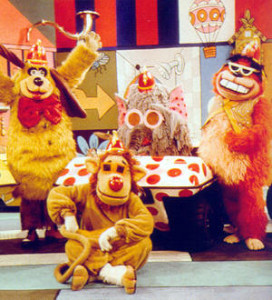
To wit: for the longest time, my kids’ favorite song was “The Banana Splits Theme Song”. Do you know how many times they’ve seen that show? The youngest one has never watched an episode and the oldest saw half an episode once but asked me to shut it off because “The Arabian Knights” cartoon was too scary. Yet, they love the Banana Splits song and ultimately the idea of the Banana Splits, especially when I tell them how much I used to love the show as a kid and how I would always wake up from my nap at 1:30 pm so I could flip on TV-56 and watch the Splits* do something funny.

* The interesting thing is that the Banana Splits was a take-off on the Monkees which was a take-off on the Beatles. So while what I was watching was a third-generation version of the original, my daughters are grooving to a fourth (or fifth) generation of the Fab Four. Let’s all do the Banana Split, indeed.

When we read comics, I’m usually reading the old Marvel stuff that I used to love and the girls are reading updated kiddie versions of that same old stuff.

When they hunker down to watch TV they both beg to watch Boomerang, which is Cartoon Network Classic. Or they ask to tune into The Hub, which has old stuff from the 80s like JEM, Transformers, GI Joe* and updated stuff from the same era. Even Nickelodeon (to an extent) and Disney keep churning entertainment built on characters from their past. My youngest is obsessed with Tinkerbell, so much that we have to watch one of the movies (usually the 30-minute short) every night before she goes to bed. And while these movies are new, the character of Tinkerbell has to be about 60 years old now.

* By the way all of the shows we liked as kids suck now. There is literally no rhyme, reason or logic to any of the plots—which are so warmed over and hackneyed they’d make Chuck Lorre blush in their unoriginality.

The toys that they own are things both my wife and I played with when younger: Legos, Cabbage Patch Dolls, Barbie (I’ll let you guess which of the proceeding toys I played with the most – answer below!). Even some of the toys that weren’t around when I was a kid have some sort of mooring to the past. For example, the oldest was on an American Girl Dolls kick a few months ago. These are extremely expensive dolls and accessories that have back stories set in the past*. Some dolls are set during the Revolutionary War, some dolls are from the Civil War, others are part of the Great Depression (so fun!). My oldest loves Julie, who is based in the 1970s.

* There are some dolls that have adventures in the present, but the ones that American Girl seems to focus on and market are the ones from past era.

Many of the toys that are on the shelves today seem to be a derivative of something that sold well in the past. And I know why this is true: nostalgia is big business. If you can tap into a parent’s past and polish it up to look like something current it’s going to serve two masters. One, the parent won’t mind purchasing it (“It’s just like what I used to play with!”) and two, it’s new and shiny and current so the child will crave it. The first part of that last sentence is most important because the parent controls the purse strings and when they’re spending cash, they want to make sure that it will be something that’s “worth it”.

To put it another way, I remember how much fun I used to have playing with Legos when I was a kid. Therefore I have no problem spending a small fortune on buying them Legos. Subconsciously I’m thinking, “I had a great time with these toys when I was a kid, so why shouldn’t my child have the same memories?” The feeling of shared memories—even brokered over decades—is strong and manufacturers understand and exploit this.

And the most important reason for this is: it’s just plain easier (and cheaper) to repackage things that sold well a generation ago than to come up with a brand new idea.

It will be interesting to see what this does to children of this generation. If adults are stalled in an arrested development that trickles down to their, what will the effects be? I am not suggesting that Gen Xers or Baby Boomers* grew up in an idyllic era of completely new products and ceaseless imagination. There are plenty of toys that I played with, television shows that I watch, songs that I listened to that were from my parents’ childhoods. Same with them and my grandparents. However, it seems that this recycling is on a grander scale.

* Who names generations anyway? Is it some sort of pop culture collective that come up with these increasingly ridiculous monikers? Because these names are down-right embarrassing. I wouldn’t even use them if they weren’t so darn handy.

Perhaps because there are more things vying for the attention of children, toy manufacturers need a proven commodity to make money. There is a multitude of television channels that need hundreds of hours of programming. Imagination and originality are a finite (and expensive) resource, no matter what Willie Wonka tells you. On average, our kids may be getting more original programming but it’s getting lost in the non-stop caterwauling of children’s television. Just by simple necessity, the old stuff outweighs the new stuff by at least three-to-one.

The final piece to this puzzle is accessibility. When my dad or mom would tell me about things they enjoyed from when they were children, it was a story and once it was done, it was lost in the ether. Unless one of my grandmothers kept one of their toys, I wasn’t going to be able to see it, hold it, experience it. They may as well have been telling me about the first steam engine. Same thing goes for their TV shows. Every once in awhile I’d tune in to the original “Mickey Mouse Club” or see an old cartoon, but very rarely would my parents and I talk about the show and I’d see it immediately.

There was no real tangible connection.

In this era, if we can remember it, we can see it. A few days ago I was humming a seemingly long-forgotten song from an Charlie Brown show that somehow wormed its way to the front of my brain. My daughter wanted to know what I was humming, I told her, she laughed and within seconds we were on YouTube checking it out. Now her memory is of watching this show after my brain regurgitated a once lost memory. In effect, I had to experience this first before she could.

I don’t think that’s the way it has always been this way.

At the beginning of this piece I wrote about how my kids have never seen a full episode of the Banana Splits, but love the song and idea of the show; especially when I talk about it from my perspective. While it’s true, they’ve barely seen the show, they’ve seen the opening theme/introduction to the show probably well over one thousand times. In fact, my oldest runs up the playground slide backwards and playfully falls on her side because she’s seen Drooper do it so many times.

Because of the instant accessibility of our childhood combined with the repurposing of old toys and TV shows, I worry that our kids are going to have false memories. I can picture my daughter telling her friends about how she used to run up the slide backwards and fall because she remembers a anamorphic lion from a program that she used to watch “all the time” doing the same thing. But the fact is she didn’t watch the show, she watched only a part of the show though she may not intrinsically know, or really understand, this fact.

Perhaps we as a culture will one day decide that “true” memories aren’t valid or even necessary anymore. These new societal mores may eventually pave the way for a scenario that echos the beginning of the movie/short story “Total Recall”. Specifically the scene when the main character Douglas Quaid (played by Arnold Schwarzenegger because fuck Colin Farrell in the remake – and yes, I get the irony in relation to what I’m writing about) enters the travel agency to has his brain implanted with memories of a vacation he never took may not be science fiction.

Then we’ll be that much closer to finding a woman with three boobs.

Tuesday, February 12, 2013

Thursdays at 8:00


During the last two Thursdays, something interesting has happened to my television viewing: one of my favorite shows left the air and another one of my favorite shows tardily began its fourth (abbreviated) season. These two shows yin-yanged themselves onto Thursday nights at 8:00 pm on NBC.

I’m talking about “30 Rock”, which is the show that’s leaving the network and “Community” which is returning to the network – albeit on borrowed time.

To say that “Community” had an interesting nine months since a new episode last aired would be disingenuous to the word “interesting”. It’s been chaotic, as the show’s creator and producer Dan Harmon was kicked off his show for being “too difficult” to work with. Two new show runners were brought in and were set up with a writing staff that was once under Harmon.

In addition to the upheaval at the top, there were constant rumors of cancellation, but the prevailing wisdom is that “Community” wasn’t canceled because it was so close to its syndication threshold that it was actually better to have an abbreviated season so that Sony (which owns the show) could sell it off and recoup the first-run losses with second-run money. Also, Chevy Chase (the cast member who may be the most widely-known to the culture at large) has feuded with pretty much everyone on the show and in a fit walked off the show with two episodes left to film. He is not expected back.

During this uneven off-season, the group of people who love “Community” became more vocal and tried to hype the show as much as it could, using social media as a tool. The Twitter hashtag #sixseasonsandamovie trended during various times in the summer. With all of this news, “Community” was technically gone, but never left.  

* A note on the next few paragraphs, a lot of the next few paragraphs came from a few posts that I made on a Red Sox message board. You may think that it’s strange that a board devoted to sports would also have topics about television shows—and you’d be correct—but the Sox didn’t give us much to cheer about last year, so we had to expand our interests. It may be disjointed, but I haven't written long-form in about two years, so give me a break. 

With nine months of inside baseball, I was ready for the new episodes to start off and it did last Thursday. As I said earlier, “Community” holds down the lead-off spot in NBC’s “Must See TV” lineup.

Two things:

1. I think that “Community” is not an 8:00 show. An 8:00 show should be all-encompassing and welcoming. If you miss an episode of an 8:00 show, it shouldn’t be a big deal. “The Cosby Show” and “Friends” were 8:00 shows that worked well for NBC in the past. In spite the ironic title “Community” is exclusionary and much like “Arrested Development” if you miss an episode of “Community” you’re going to miss a bunch of jokes.

2. NBC Thursday night is not really “Must See TV” anymore. In fact, it’s a bit of a comedic graveyard in terms of ratings. It seems that no one wants to sit down and watch great sitcoms any more as “30 Rock”, “Community”, “Parks and Rec” and even “The Office” have seen Nielsen Families ignore them as if they were the new kid’s first day of his senior year a new in high school.

After the episode, this was my initial reaction: I liked the episode, though I didn’t love it. If I were to give it a grade it would be a B. But there did seem to be something off. I don't know how to explain it, so I'll use an analogy. I have kids and when they break something I will glue it back together. They will play with it and will use it like any other toy, but at the same it doesn't quite feel like the same thing. Something has been changed, even though it's been fixed.

Perhaps I'm making too much of this and seeing stuff that isn't there. Maybe if I didn't know the behind-the-scenes crap and wasn’t besieged by “Community” propaganda on an every-day basis, maybe I wouldn't have felt that way, but I do. So even though I went into the episode determined that nothing was broke, something felt a bit off.

The one negative is that there seems to be too much Dean Pelton . I like the character a lot, much the way that I liked Ed Helms' character Andy Bernard from his first couple of seasons on "The Office". But once Helms started getting a ton of camera time, it became too much. I think that there are two things wrong with the character:

1. He's a bit of a one-note character. Like Bernard, Pelton is a broadly stroked character.

2. There are already six main characters, seven if you count Sr. Chang, and a bunch of really good background characters that sometimes move to the foreground. The show is only 22 minutes long, so there is only so much that each character can do. If you add another one then you take away from the core six.

Other than that, I thought it was a good beginning.

The premiere of “Community” has me a bit worried (I guess as worried as I could be about a TV show – first world problems!) about the return of "Arrested Development" to the land of the living. And it's not that I'm worried about the quality of the show, I'm worried about my crazy, high expectations. I still DVR AD and watch as many episodes as much as I can, it's like the early seasons of the Simpsons and Seinfeld, I know every episode front to back. And much like how later seasons of "The Simpsons" (and "Seinfeld" for that matter) fared in comparison to the syndicated version of the show being shown right before the newer episodes, the perceived quality of the show always seemed worse. Whether that is true or not is left to be debated at another time.

The point is this, will "Arrested Development" Season 4 be considered as "good" as seasons 1-3, at least initially? No. People are going to say that it's missing something, much like some of us are doing now. But in reality what the show will miss is the mythology of the first three seasons and the constant syndication of those seasons. In this case familiarity doesn't breed contempt, but love. I think that fourth season of "Community" may go down the same path, albeit without the constant replaying of the shows.

Also what's working against "Community" (and AD for that matter) is months and months of hype of how this is "the best show ever" and how "NBC is stupid to cancel it because it's so awesome". From my own experience there have been a grand total of one time where I have waited for something for a long time and the result lived up to the hype (both in my head and from the pop culture world around me) and that was this past summer with "The Avengers". I'm not saying that "The Avengers" was the greatest movie ever (far from it), but since I bought my first Avengers comic back in 1981, I dreamed of how it would look like on the screen. And it looked almost exactly how imagined it.

Anyway, the point is this, things that are overhyped tend to disappoint and rarely live up to expectations. That doesn't mean that they're bad, it just means that they aren't quite as good as what we thought they would be. Again "Community" is perceived as such in an us-(meaning "intelligent" TV watchers)-vs-them-(slack-jawed CBS watchers)-pop-culture mentality that there is a chance Season 4 will never live up to those incredibly high standards. Plus the unanswered question of "What would Dan Harmon have done differently"?

Which leads to my next point, as far as Harmon leaving, he probably didn’t have a bottomless pit of ideas, but he was fastidious in his attention to detail that it made watching and reading about the show incredibly fun. We've all seen the Beetlejuice thing right? That's some epic-level, OCD, editing right there. It's almost sick (as in mental illness wise) the way that Harmon orchestrated every, single piece of this universe. That's what I'll end up missing (even if I don't know at the time that I'm missing it).

That last question (what would happen to a show if the main voice left) was something that “30 Rock” never had to deal with. Despite being saddled with terrible numbers (but tons of love from the industry and TV critics), NBC stubbornly kept it on its schedule. With the show experiencing a resurgent in writing during its last season, some people felt that it was unceremoniously shown the door.

I think that their anger is misguided because what other network would have the patience to keep this show on the air despite it never being a true hit? This was the best era and NBC was the best network for this show to be on. The Peacock Network has been so bad during the last decade that they kept one of it's only critically acclaimed shows going even though the numbers were god-awful.

What if this show debuted during NBC’s salad days or on another network?

If this was the 80s or 90s, the show would have lasted a month, tops.
If this show was on CBS, the show would have lasted a half-season.
If this show was on HBO, it wouldn't have been half as clever as it is.

NBC did a really good job nurturing this show and giving it a chance (IE not moving it around, I'm pretty sure it was always on Thursday) and gave Tina Fey a lot of latitude in the scripts. If you wanted to watch “30 Rock” you knew where to find it.

As has been said time and again, networks aren’t charities and they don’t keep shows on the air that don’t make money. “30 Rock” brought prestige and was allowed to leave on its own terms and with something left in its tank, which is rare. A show like “The Office” is limping to the finish line, “Friends” was down-right unwatchable in it’s last few years. I enjoyed the Larry David-less seasons of “Seinfeld” but even I admit that it lost some of it’s cynical bite that made it so awesome.

Maybe when networks cancel a show too early, it’s a good thing. It allows us to rage against the machine while also allowing us the ability to use our brains to imagine what the next seasons would be like. TV shows have a shelf life, our imaginations do not.

Monday, October 24, 2011

The Big Show


There is probably no other sport more photographed than baseball. There are myriad reasons for that, the chief being that baseball was the nation’s game at the turn of last century when the art of photography was just taking shape. Also the pace of baseball lends it to being photographed more than hockey, football and basketball.*

* During Joe DiMaggio’s record 56-game hit streak in 1941, there is a picture of DiMaggio ripping a hit. Most of the time this picture is cropped, but in the uncropped version there are three or four photographers five or six feet away from the batter’s box. I’m not sure when this practice fell out of vogue, but it’s startling to see people without protection so close to the action.

One of the better photographers of this early era of baseball was Charles M. Conlon. In a new book called “The Big Show” Neal and Constance McCabe gathered some of Conlon’s best work and preserved it in an exquisitely done coffee table book featuring a few hundred of Conlon’s 30,000 shots. There is also a remarkable foreword written by “Boys of Summer” author Roger Kahn.

There are plenty of stars littered through out this book: the aforementioned DiMaggio, Walter Johnson and Tris Speaker to name a few, but the main characters in this book are, to use baseball card parlance, the “common players”. Ballplayers that had solid careers, but weren’t household names. The McCabes did a fantastic job of choosing terrific shots and incorporating vivid stories to go with the pictures. And in a way, it underlines what baseball can be about.

In the annals of baseball, for every Babe Ruth or Ty Cobb story there’s a cool story about a guy like Fred Snodgrass, a player who had an auspicious past. He was a slick-fielding centerfield who dropped an easy pop fly for the New York Giants against the Boston Red Sox in the 1912 World Series. This is one of baseball’s biggest and most famous gaffes and the authors mention it in his write up in a roundabout way. Instead they focus on an incident in 1914 when he was almost plunked by a Boston Braves pitcher Lefty Tyler. Snodgrass took exception said some words and Tyler responded by throwing a ball in the air and dropping it, mimicking his mistake in the ‘12 Fall Classic. Snodgrass went back to the batter’s box, was promptly plugged and started a brawl.

After the brawl, Snodgrass went to first base and he thumbed his nose at the Braves fans who went bananas throwing bottles, cushions and anything else they could at him. The Boston mayor tried to have him ejected from the game from starting a riot and harbored a resentment towards him until the following year when he was dealt to the Braves. *

* A few things: one if this happened today both Tyler and Snodgrass would be internet sensations and talk radio would have a field day with this story. “Tyler did what?”, “What was Snodgrass thinking egging the crowd on like that?” And when Snodgrass died, his New York Times obituary headline read, “Fred Snodgrass, 86, Dead; Ball Player Muffed 1912 Fly.” That just sucks.

And there are literally hundreds of players like this in the book all with thoroughly interesting stories.

But the real star of the book are the photos. When I was a kid, black and white pictures from around this time scared the crap out of me. I don’t know why, it probably had something to do with the fact that these guys don’t look like anyone that I was used to seeing. And it’s still true, these players all look like hardscrabble men who came to the wilds of the country to play ball in the big city. Their complexions and eyes are pointed and dark, their faces ragged with deep lines, their smiles crooked and wherever they’re standing, it looks cold and dank.

Most of these people were younger than me, yet they looked more world-weary than I will ever be. These athletes should be in the prime of their lives, but they don’t look it. And that’s what’s so interesting about them. They look tired, weary and like they have a million things on their mind other than baseball. The youthful exuberance that we associate with today’s game is nowhere to be found back then. But that’s the expression that all working men had back then and the baseball players found in this book are a reflection of that.

One hundred years ago, life wasn’t fun. If you lived in the city it was cesspool of crime and filth, if you lived in the country you were cut off from modern life and grew up backwards and (probably) illiterate. There wasn’t much to be happy about. Some time after World War II this all changed and Americans became a more “happy” people. Life simply wasn’t as hard and this continues today. Things are getting easier, but it’s important to remember where we came from and recognize the folks who pioneered for our way of life.

“The Big Show” brings those people to life.

Tuesday, May 24, 2011

I Don't Know How to React to This


Every day I read a Blog called TVTattle.com, which is a list of links that relate to television. Yesterday I came across a link that said, "Gwyneth Paltrow raps 'Straight Outta Compton'" and I have no idea what to think of this.

Twenty years ago, I would have been pissed. I'd get all self-righteous and wonder how an ultra privileged woman born with a silver spoon jammed in every orifice (she is the the daughter of actress Blythe Danner and film and television director and producer Bruce Paltrow) could identify with NWA and their message. I would drone on and on about how while Paltrow may have lived in Los Angeles, there is no way that she came close to Compton nor did she understand the racial and socioeconomic struggles that the group was talking about. On and on I would go about the obnoxiousness of this woman and how fake she was and how it was just all bullshit.

I'd probably even think that NWA sucked because they were reaching "this type" of audience of faux hipsters with fake English affectations whose only worry is whether to spend the summer in the Hamptons or traipse around Europe.

And here's the thing, not only would I be 100% wrong but my diatribe and outrage would be boring.

Who am I to tell anyone what music they can listen to? If Gwyneth Paltrow digs on NWA, then fuck it, she should listen to NWA. And it's not like I'm a product of the ghetto. I explain my background with NWA here. Aside from the bank account and the looks, I'm really not that different from Paltrow.

NWA wasn't speaking to me anymore than they were speaking to Paltrow. We just happened to come across the transmission and at the very least, enjoyed it and at the most were moved by the rhymes that we heard. And that's the job of music.

Bringing the reaction to the present, it's a funny clip. Paltrow gets the name of the song incorrect--it's not "Straight Outta Compton" it's "Gangsta, Gangsta", but it's a goofy minute of TV. That's all it really is. I don't think that it means that Paltrow was a secret Black Panther however it actually showed me a glimmer of humanness that is buried under the veneer of press clipping, PR statements and the careful speech of Paltrow.


What it all comes down to is that at one point NWA was considered the most dangerous, most scary band in America. They really weren't. While they had a lot of truth in their raps, ultimately they are just another in a long line of musicians that made an indelible mark in American popular culture.

Tuesday, May 17, 2011

Kill Your Leaders?


Currently I’m reading a book called “Why Rome Fell” which details the reasons why we don’t solely speak Latin any more and don’t care for Italians—other than every four years when the World Cup comes around. It’s a pretty good book, a little dry in some parts, but filled with some interesting tidbits about Roman Republic’s lesser known emperors who make Nero look like Mr. Rogers.

What I find most fascinating is that the way that most of these emperors came to power is through a brutal and always violent power grab. The would-be emperor was either a general or a senator who had the backing of the army who decided that they wanted to rule Rome*. They’d then kill the existing emperor and after a song-and-dance with the Senate (“No, no. I couldn’t accept this crown? Oh, alright. I’ll do it.” It reminded me of Tenacious D’s “City Hall”.) would accept the crown. Normally within nine months or fiveyears later, the cycle would repeat itself.

Power was transferred like this for a couple of hundred years and the people of the republic seemed okay with the way things went down. They just went on living and paying tribute to whomever was running the show.

* An interesting story that exemplifies the treachery of the age was of Emperor Valerian and his co-ruler who happened to be his son, Gallienus. Valerian was taken prisoner by Persian King Shapur after he tried invading Persia. Shapur didn’t just throw Valerian in a prison and let him rot. The story was that he used Valerian to make him get on his knees so that Shapur could mount his horse, essentially turning him into a step stool. Once Shapur died, the Persians skinned Valerian alive, painted him red and hung him in a temple as a trophy. Gallienus didn’t even try to rescue his father, he was having too much fun being the sole emperor.

At some point in history, the act of overthrowing an unpopular ruler by brazenly murdering him and then taking over his rival’s position lost a bit of favor with civilization as a whole. The answers are obvious to us why this isn’t a good idea and to be truthful, I’m not even sure why someone would want to be ruler of Rome if they know how the story is going to end.

When did this practice stop? What prompted the ruling hierarchy to figure out that this wasn’t a good solution to replacing leaders. Remember, this didn’t happen over a decade or two, the activity of murdering the emperor occurred over centuries. At some point the light must have gone off in someone’s head and it was decided that this wasn’t a good way of doing things. This moment of clarity represents an evolution in the modern human brain. Or it at least represents some foresight and the ability to understand history.

What if this practice came back into vogue? All of a sudden being the President really became a life threatening job that usually ended in a grizzly death? And not only was the assassination by someone that you trusted, but it would be one that virtually no one would mourn. Even when shitty presidents die, it’s a pretty big deal in America. But if this was Rome and a shitty emperor like Georgius Bushian II died, he’d be thrown onto a pile with the rest of the plagued and war-torn bodies. It would barely register a mention in any of the public records.

I’m obviously not advocating for a return to regularly-scheduled regicides*, but I would imagine that after a few of them went down in quick succession, we’d have the same blasé reaction to them as our Roman ancestors did. Remember, much like the United States, at one time Rome was the crowning achievement of civilization and if their economy and their ways of life were able to exist and thrive with their leaders getting snuffed out every few months, I’m sure that the American people could eventually handle it too.

* I know that this is the Latin word for an assassination of a monarch, but I’m not sure what the Latin term is for the assassination of a president. I tried looking it up on Google, but couldn’t find anything.

In any event, those years before deciding that our leader’s lives were worthless would descend into complete and utter chaos. In other words, it would suck. Thank god for the anonymous cabal that controls and runs our world.

Monday, May 09, 2011

The Constant Quest for Coolness


BTW, this picture was the first one listed when I typed the word "cool" into a Google Image search. There were a lot of LL Cool J pictures, but he's no Millhouse.

I am 36-years-old. I’m married with two children. I own a home in the suburbs, I work a normal 9-to-5 job and every day I drive one of two Hondas that are parked in my driveway. I am not part of any family feuds or dramas, I like my wife’s family a lot and get along well with 99% of people I know. Aside from going out to dinner with my wife, most weekend nights involve me hanging out with my family and watching a movie.* During the entire weekend, I may consume six beers; if I drink more than two I get sleepy. I am thoroughly and completely in the most stable period of my life and I love it, I have no reason to try to be cool or impress anyone.

Yet I rewrote this opening paragraph at least three times because it didn’t convey the “right” message.

* I can honestly argue about the plot lines and discrepancies of any of the three Tinkerbelle movies and could probably quote entire scenes on request. This is just what happens when you have a three-year-old daughter.

My generation is the first generation that constantly seeks validation from others that they’re cool. Not that they’re good people, or that they live a virtuous life; but that they’re cool. And it’s not going to matter how old we get, we’re always going to wonder if what we’re doing is cool. I don’t think that it’s something that we can ever stop either, because since we were babies we have been exposed to a daily dose of what cool is.

I was born in 1974 and one of the first memories I have is of my Star Wars pillow case and a plastic “Happy Days” cup that I drank my milk from daily. The pillow case had the entire cast of characters, but aside from Darth Vader’s gigantic head looming as a scary moon, the most prominent character was Han Solo. My beloved “Happy Days” mug didn’t have a group shot of Richie, Ralph, Potsie and the gang; it was just a picture of Fonzi taken from the shoulders up against the backdrop of a brick wall. His expression was a bit different than his outer space compatriot. While Han Solo’s likeness was all action: gun drawn and about to leap from the canvas. Fonzi’ expression was one of utter indifference, it looked as if he just got done with the Aloha Pussycats and was exhaling his trademark, “Ayyyyyyyyyy!”

Both of these cultural touchstones were at the peak of their popularity during the late 1970s, the number one movie event of all time paired with the number one TV show in the land. And both had charismatic anti-heroes who looked similar (Harrison Ford and Henry Winkler shared a similar coif and facial structure ), who dress alike (black jacket/vest with exposed white TV shirt), who had the same mission in life (shepherd a nerds to the promised land – getting girls or blowing up the Death Star), who didn’t talk much (men of action, mostly), both drove iconic vehicles (the Millennium Falcon or a motorcycle) and both got the girls at the end of the day.

While the movies and TV show weren’t especially targeted towards kids my age, the duo were so gigantic that they eventually filtered down to my age group. And what was the message? Being cool was the ultimate and it trumped everything. Fonzi’s pal Richie Cunningham was a decent athlete who received high marks through high school and college and Solo’s buddy Luke Skywalker had the Force and was on his way to being a Jedi Knight. But Fonzie and Han Solo were the breakout stars of their medium and the “main” stars were often relegated to the background when Fonzie and Solo shared space with them. They were who everyone wanted to be because they were effortlessly cool.

Being cool didn’t stop when the popularity of “Star Wars” and “Happy Days” waned. As the 1970s bled into the 1980s more and more TV shows had at least one character whose job it was was to be cool. On shows that were targeted to tweens (we weren’t called this then) like “Diff’rent Strokes” it was Willis and on “Silver Spoons” it was Rick Stratton. As we got older, the shows changed but the attitude stayed the same: the entire premise of “Miami Vice” was two cool cops fighting crime.

And it worked in reverse as TV series that ran prior to the hay day of “Star Wars” and “Happy Days” retroactively made their characters seem cool; with ubiquitous reruns showing Greg Brady, JJ Evans and Keith Partridge cooling it up in their seemingly daily adventures.

The tempo changed was amped up in the 1990s as shows geared towards teenagers and stoned 20-somethings (“Beverly Hills 90210” and “Saved by the Bell”) dumped the one-cool, rest nerds formula of the 1970s and 1980s and replaced it with an entire group of cool kids and one nerd to provide contrast (David Silver and Screech for 90210 and SBtB).* Even shows geared towards adults, like “Freinds” or “Seinfeld” were about what happened once the cool table moved from the high school cafeteria to Manhattan—just edging out Seattle as the ultimate cool city in the 90s. The entire philosophy of the FOX network was that they were cooler than the other three networks.

And it wasn't just television, if you boil down a lot of movies from this time, it's really just about trying to be cool. "Pulp Fiction", "Clerks", "Swingers", "Clueless" were, at their cores, movies about the main characters trying to be or keep some semblance of coolness. These movies wouldn't have worked in the 1980s as audiences weren't prepared to see adults try to be cool.

* The one thing that’s odd about coolness in pop culture is that it is always evolving. If you jammed Fonzi in a sitcom today, he wouldn’t be cool because mores have grown and changed. However, the nerd or uncool character never changes. Potsie could change places with Urkel who could exchange roles with David Silver who could have been Will Smith’s dorky cousin on “Fresh Prince of Bel Aire” all of whom could be uncool character X on the latest FOX sitcom. Since the dawn of time, the nerd has stayed constant. Maybe that’s why it’s so easy for a person to be an outcast. Being cool is hard and an always-evolving role, being uncool is easy in comparison.

Suddenly it wasn’t fashionable to be the cool fish in a pond of dorks. Each cool person needed to find other cool people in which to hang out. As we grew up, we were completely and totally immersed Alex DeLarge-style in this never-ending, never-blinking loop of what cool is. It wasn’t just kosher to be cool, we had to be part of a cool subset too. Because of this maturation of coolness, we subconsciously learned that being cool is the only thing that really matters.

And this is why I wear a Public Enemy t-shirt, with blue adidas Gazelles and a throw-back baseball cap. It’s why my friends, most of whom are approaching 40, still play in a band, or will scour the Internet for the latest underground band or watch Adult Swim or stay up until 3 am drinking beer and playing video games and then drag their asses to work the following day. Because all of those things are pretty cool things to do.

I think back to my father and members of his generation. None of them wore sneakers and band t-shirts, hell, none of the ever wore t-shirts at all—if it was a weekend, it was polo shirt time. None of them were in a band or knew anything about the latest music or even knew how to turn on an Atari. And while I can blame this on the perspective of being young, most of the adults that I knew were responsible. Yes, there were a couple that were completely irresponsible, but even in that fashion, they were irresponsible in an adult way.

Why is that? Because while coolness was a factor when they were teens, it never seeped down to their days of impressionable youth. The line delineating entertainment for older and younger kids was clearly marked. If you were born in the mid to late 40s, you watched “The Mickey Mouse Club” or “Howdy Doody” and aside from Annette Funicello’s tits, there wasn’t anything cool about either show. They starred a bunch of dorky white kids doing dorky white stuff. At the same time Marlon Brando and Jimmy Dean, the Rat Pack and tons of jazz and blues heroes were emerging and taking coolness to a new height, but rarely did that move into the collective subconscious of this generation.

As the baby boomers grew older the hip touchstones began: Elvis Presley, the Beatles, the Rolling Stones and what signified cool became more and more defined. As that was taking shape, the lines of what was suitable for young kids were being erased. The second decade of television brought with it a familiarity so strong the TV set wasn’t considered immovable furniture—like a kitchen table—anymore. As technology improved, mobility improved too and now one could roll the TV into the kiddies’ room and you could have a baby sitter for the afternoon.

It’s this constant exposure to mass media that causes a 36-year-old to look in a mirror and ask, “Does this look cool?” when there is no one to impress. And these questions of coolness inhibit our interactions with other people. The other day I was walking to the cafeteria for lunch and I saw a coworker walking through the foyer wearing a bright blue shirt. Emblazoned on that shirt was about 30 different Marvel Comics characters. If you’ve ever read this Blog, you know that I dabble in comics, but my first thought was, “Jesus, what’s wrong with this guy?”

The lesson in this story wasn’t that I was being a judgmental prick because obviously, I was.* But the lesson was much like I was when I was a teenager, I’m still conditioned to make instant generalizations on people that I don’t know solely based on how they dressed. And while I take no solace in knowing that I’m not the only Generation Xer that does it, I have to wonder when will it end.

* I mean seriously, I wear a Public Enemy t-shirt—when will the revolution be televised, Gramps? And on that particular day I was wearing a t-shirted version of a 1970 Houston Astros baseball shirt.

Is there ever going to be a day where I don’t give a shit about what someone’s wearing, watching on TV, listening to, driving around in or talking about? Because really, when it comes down to it, who gives a shit? Haven’t I learned from shows like “Freaks and Geeks” and “Undeclared” and the myriad of Paul Fieg/Judd Apatow movies that the cool kids are usually the most shallow, the most insincere, the most boring?

Why would I want to be like that? Especially now.

Friday, May 06, 2011

My Weekly War with the New Yorker


This entry isn’t so much about my problem with the periodical the New Yorker, it’s mostly about the Mexican standoff between me, laziness and free-time. Usually laziness and me gang-up and kick the crap out of free-time, but there are times when laziness and free-team turn the tables on yours truly. In any event, the New Yorker is a perfect conduit for this standoff that happens every day.

In my opinion, the New Yorker is probably the best magazine being printed today. It’s smart, it’s timely, it’s funny, it has cartoons, most of today’s top writers would give their thumbs to appear in its pages. And the best thing--the length of the articles--are ironically what’s kicking my ass on a daily basis*.

They’re too interesting and too long—and trust me, I will expound on this insanely whiny reason after this Posterisk because I sound like a world-class steakhead with the first six-and-a-half words of this sentence.

* Whenever I complain about the downfall of Sports Illustrated, I always crab about the length of the articles; mainly they’re too short. Usually, I’ll say that when the story really starts to get going, you see that little box at the end of the page and you know that you’re done. I’ll prattle on (I'm a hit at parties) that when I was a kid, the articles were “much more in-depth” and it was a “more satisfying read” when I was younger. Yes, the articles are a bit shorter than 20 years ago, however what I really mean is that SI seems to know that I don’t have the time to read long articles, so they’ve made them shorter. This in turn, pisses me off because subconsciously, I know that I don’t have the amount of free time that I used to but I'm not ready to lose that battle yet.

Since I was in my mid-20s, I’ve always wanted a subscription to the New Yorker. Not because it’s the quintessential “adult” magazine, but because I found each issue packed with interesting articles and thought that if I read them I’d become a more well-rounded, educated person. And while that certainly was a reason, I also harbored thoughts of where I'd read the articles that would make me a hit at any cocktail party. There I'd be in front of a roaring fire, in a high-backed leather chair that is part of an immense home library where I’d be in a velvet smoking jacket, a snifter of brandy at my right hand and that week’s New Yorker in my left paw. Oh, I’d chuckle at the issue’s bon mots, nod approvingly or shake my head with consternation when reading articles about foreign policy, maybe even shed a tear or two when reading a piece about some ravaged far away land.

In my mind’s eye, I was more erudite than Mr. Howell (this reference should have been my first clue that this was a complete fantasy) and more worldly than Uncle Traveling Matt (and there’s my second clue) and judging from the home library and smoking jacket, richer than Scrooge McDuck.

As I’ve come to find out, future events that happen in your mind never coincide with what happens in real life. In reality, there are a few places where I read the New Yorker:

1. When I’m on the couch and my wife is watching a show that I hate
2. During the 45 minutes that I carve out for lunch at my desk. Of course, I’m not really concentrating too much on the written page because I also have to keep one eye on my email inbox.
3. While I’m on one of the cardio machines in the gym. And if you've seen my waist line recently, that hasn’t happen in about six months.

Deep down I knew that I was never going to get the immense home library or high-backed leather chairs or the velvet smoking jacket. But it would still be nice to really concentrate on a truly great magazine.

About 10 different magazines arrive in our mailbox every month (the New Yorker is a weekly) and I rarely read any of them.

A few years ago I subscribed to Esquire because one of my favorite authors, Chuck Klosterman, wrote a pop culture column every month. Two months after I subscribed, he stopped writing for the magazine. In recent years, Esquire has turned into a bossier version of Maxim and is filled with mindless articles on “manly” celebrities (like Vince Vaughn) who are pushing their next mindless movie that I’ll never see. Every two or three months they have an article that I may want to read, but I have to wade through so many perfume and designer ads that by the time I get to the article, I smell like the first floor of Macy’s and I’m concerned that I'm under dressed to read the piece. I have two years left on my subscription.

We also get ESPN the Magazine, but I only subscribed to it so that I can get the Insider columns on ESPN.com. I rarely even crack open this literary abortion, but when I do it looks like it was written by ADHD chimps who have been raised to think that AXE Body Spray and Mountain Dew advertisements are the pinnacle of page design and literary achievement. I know that I sound like an old man trying to figure out these damn video games that the kids play these days, but on the occasions when I do peruse this magazine it’s actually difficult to know where to begin reading. ESPN the Magazine gives me the literary version of an ice cream headache.

Entertainment Weekly comes to our home too and most of the time, it’s not worth the $6 I pay for the yearly subscription. However there are times when it doesn't disappoint and the way I look it is if I get one or two issues that touch on something that I enjoy, then it almost pays for itself.

Aside from the New Yorker, the other magazine that we get (and that I like) is Boston Magazine. But I like this for reasons other than the New Yorker; I like to read it because they review restaurants and places that I may have been to. I sit there and say, “Aly, remember we went there?” or “Aly what did we eat there? It was pretty good, right?” I’m sure my wife hates Boston Magazine day at our house. They also have some pretty breezy articles that are enjoyable to read.

The rest of the magazines that come to my house are food magazines. Those are for my wife and she enjoys them. I think.

The difference between the New Yorker and the rest of these magazines is that it’s not written for a person with a third-grade education. The writers don’t dumb down their articles, it’s the responsibility of the reader to fill in the blanks if they don’t understand a topic. And while that’s an admirable quantity, it also one of the things that makes it tougher to read. Any of the magazines I’ve listed above, I can buzz through in about an hour (ESPN the Magazine and Entertainment Weekly, 10 minutes tops). And this isn’t a humblebrag, there just isn’t a lot of substance to these weekly/monthly reads.

But the New Yorker is prestigious, even the cartoons have some sort of gravitas—and I am not ashamed to admit that one of the main reasons why I originally subscribed to the New Yorker is because of the cartoons. Both the subject and the art are better than you’re going to find in the daily newspapers. They aren't all gems though.*

* One of the most famous episodes of “Seinfeld” is when Elaine couldn’t understand a New Yorker cartoon, so she confronted the editor of the magazine and walked away with a cartooning gig. Not surprisingly, it’s one of my favorite episodes of that TV show. And the fact that her published cartoon was a rip-off of Ziggy is even better.

While the New Yorker is a weekly, humbling experience it’s subscription is still something that I’m going to continue. Some of my brightest friends subscribe to the magazine and I've found that they’re just like me, they have dozens of issues scattered around their house dog-eared and worn pages with titles circled—indicating that these are articles that will be read later.

It seems to me that we’re all fighting the laziness/free-time battle with ourselves. I guess that we’ll get around to reading all of this stuff when we retire—what age is that again?