Showing posts with label Bo Jackson. Show all posts

Tuesday, October 11, 2022

Carlos Quintana 1990 Fleer

 Sometime in October 2022 I received this card from the Baseball Card Bandit (BCB):


When I was younger, I was obsessed with rookies. The promise of a new ballplayer waiting in the minors to ply his trade in the Majors was like catnip to me for a number of reasons. For one thing, I was always one to appreciate the anticipation--the journey--rather than the destination. Christmas Eve was always more exciting to me because of the unknown; maybe Sana would bring me an AT-AT this year or a Millennium Falcon or a 2-XL robot. 

A lot of kids were excited about the minutes after ripping open their presents. The gifts still in the packages, framed by feet and feet of colorful wrapping paper. "What am I going to play with first," they thought. Me? I was always a bit depressed. "Is that it? Do I have to wait another 364 days to get what I really wanted?"

The anticipation was the killer, because reality never was as good as your imagination. 

In the 1980s, rookies were big business in the baseball card world and it was because of the promise of "What if". What if Mark McGwire hits 70 home runs in a year? What if Al Pedrique makes people forget Ozzie Smith? What if Ellis Burks is a perennial All-Star who leads the Red Sox to a World Series? 

And what if I have their rookie cards? Shit. I'll be rich. More than that. I'll be filthy rich. My college expenses? Taken care of--my kids' education too. New car? How about a sweet ride for every day. My parents? They could retire. These flimsy pieces of cardboard were the keys to my financial stability for the rest of my life. The key was that not only did I need to own and keep these cards mint, but the ballplayers on the front of them need to fulfill their promises. 

They'll get rich and so will I. 

So being very keen on rookies was both something that was encoded in my DNA (anticipation of greatness) and was important to my budding financial portfolio. The one thing that ratcheted this up even further was that there was probably 100 rookies making their debut every season. You could collect all of their cards, but you couldn't collect the multitudes of their cards necessary to make you wealthy. So you had to pick and choose. Who had the look of a guy that was going to not only be good, but capture the zeitgeist in a way like Mickey Mantle or Willie Mays did?

You find that guy and not only are you made in the shade, but you can tell everyone how you picked him. You saw the thing that made him special. You're the smartest one in the baseball card shop. It's an ego stroke. 

With that preamble, today's card: Carlos Quintana, I was never a fan of. I can't tell you why, because I was immediately invested in every Red Sox rookie but from the time he was called up to Boston until the day he left Fenway five seasons, I wanted him gone. I don't know whether it was because he didn't have the makeup of what I thought a first baseman or right fielder (his two primary positions) should have: namely power.

For his career Quintana slashed .276/.350/.362 and hit 19 home runs. Total. He played 149 games in back-to-back seasons (1990 and 1991) but I couldn't tell you a single big moment that he came through in. He was just there. There was nothing exciting about him. He hit close to .300 those years, but his power was low (11 homers was his career high in 1991) and he was particularly defensively gifted either. 

At the time I just wanted my stars to be bigger than life: Rickey Henderson, Bo Jackson, Jose Canseco. Dudes who were fast and knocked the ball into next week. Quintana was nothing like that. He'd hit singles and play station-to-station baseball. He was an uninteresting player on a good, but ultimately uninteresting team. 

Watching him every night was anger-inducing. Why does Oakland have all the good rookies? Pittsburgh too. And Cincinnati. And Chicago! They have two teams with two awesome young players (Mark Grace and Frank Thomas). Boston's best rookie is Carlos Quintana. Gross. 

In February of 1992 the most interesting--and worst--thing happened to Quintana. He was in his home country of Venezuela playing winter ball. He had to drive both of his brothers to the hospital, they were both shot. As he was speeding to the hospital, he got into a pretty big car accident and broke his left arm and big toe, while his wife broke both of her legs. He was out for the entire 1992 season.

It was a tragedy that I don't remember anyone ever getting to the bottom of. I think that reporters asked about it, the Red Sox made some statements and then it was dropped. I don't want to say that's how boring Carlos Quintana was but if that happened to Wade Boggs or Roger Clemens or Mike Greenwell, I think people would still be talking about it. 

That injury opened the door for a player who was already pushing Quintana, Mo Vaughn. Vaughn was the rookie that everyone wanted to play. He was loud, he was a big dude, he could hit for power and average, he had presence. I thought that he was the Red Sox version of Frank Thomas. And now he was getting his shot! This was the anticipation that I was talking about!

Handed the first base job, Mo didn't have a great year in 1992 and when I read the reports Quintana was working his way back, I was nervous. Was this going to be like the Christmas days of the past? Not really. Quintana came back and played the 1993season  and he was clearly still hurt. The Sox kept big Mo at first and bounced Q around from first (to give Mo a break) to the outfield, but he wasn't the same player. They released him after the 1993 season and he never played in the Majors again. 

Mo turned into an All-Star, won the MVP in 1995 and had some truly great seasons for the Sox before departing to the Angels for big money. That wasn't his best decision as he was hurt, fat and ineffective for California before getting traded to the Mets and finishing his career. 

At the end of the day, no one really got rich off of baseball cards. I paid my college loans every month, I wasn't able to allow my parents to retire early and my wife and each have a car (not seven). But that anticipation is what keeps you going. You just never fucking know. 

Friday, November 13, 2020

My Brother


Wednesday was the first day in 15,498 days where the sun rose and my brother, Jason Magrane, wasn’t around to see it. He passed away on Tuesday November 10, 2020 at 12:42 pm at Portsmouth Regional Hospital in Portsmouth, NH surrounded by his mother, father and me.


That last sentence is the type of “just the facts” information that I would throw down when I was a reporter writing obituaries. It’s not very personal and it doesn’t give much of a picture of who the deceased was, it was more of a record that this person existed for a time and then departed the world.


Like you, I’ve experienced death before, but the passing of Jason has hit me hard. He was much more than a range of dates, he was a father, a son, a husband, a friend, an employee, a boss, but most importantly to me, he was a brother. As I’m writing this blog post on November 12, I can only think of the future and the past. Jay is going to be laid to rest two days from right now but three years ago to the day, I gave the best man’s speech at Jason’s wedding. Below is a portion of what I wrote, this was supposed to be a toast to Jason’s nuptials, never did I envision it becoming part of a eulogy:  


“According to Magrane lore, when my mother came home and told me that she was going to have another baby and it was going to be a boy, I was inconsolable. I wanted a sister and the thought of having a brother muscling in on my territory and sharing my toys was too much.


Despite my best wishes, Jay never turned into a girl, so I was stuck with a brother for my childhood. And it turned out to be pretty awesome. Growing up, Jay and I were pretty much alone at any extended family gathering—and we used to see our family a lot. I would think about friends who had dozens of cousins and how they’d talk about hanging out with them at family gatherings and it sounded pretty great.


But with Jay and I growing up together, we had to be each other’s best friends. Whether it was at my grandmother’s house or Aunty Rita’s or at Cousin Kathy’s in New York, it was just him and me. That meant he and I would play He-Man and GI Joe, read comics, or draw or play Wiffle Ball. It was always Jay and By or By and Jay. With us being together that much, it could have gone a few different ways, but we became close.


A few years later, as I got into high school and had my own group of friends; I began to notice that my friends—all of them—took a liking to Jay. Was I happy about this turn of events? No, I was not. It used to drive me crazy that my friends always invited Jay to come with us whenever we did something, whether it was hoops or pond hockey, Indian ball or football, Jay was always a part of the crew. And not only that, but my friends genuinely liked him and respected him.


It wasn’t until a few years later that it dawned on me: some of my friends had younger siblings and they were never invited to do stuff with us. Jay was included because he was funny and smart, athletic and loyal; he was included because he was one of us.”


It’s funny, when you grow up with a brother, you’re inundated with a lot of media about how close brothers have to be: from Wally and the Beav to Greg, Peter and Bobby to Willis and Arnold, all of those brothers were the best of friends.


But real life isn’t like that. Life isn’t scripted, each person doesn’t know exactly what the other person is always thinking and problems aren’t solved in 30 minutes (minus time for commercials). The idea that two people could be complete and total best friends forever and ever and ever without any disagreements is a silly, unrealistic myth.  


As we grew into adulthood, Jay and I were close-ish. We were both independent men who had their own life and their own life’s philosophies. Mine was a bit more conservative in regard to risk and rewards. Jay was the opposite. Jay lived his life the way he wanted to live his life, which I found admirable and a little concerning, but that wasn’t how my brain worked. Jay could talk to literally anyone—he had no fear in that department, made everyone feel comfortable—which is an awkward endeavor was for his older brother, was fun, constantly laughing and wondering when the next good time was going to happen.


As we grew up we worked through our differences and over the last few years, we began to get closer. While we didn’t agree on everything, I could at least understand why Jay was doing what he was doing. And I think he could see things from my point of view too. Even though we were closer, Jay still wouldn’t (or couldn’t) tell me what was bothering him when asked. And it wasn’t just me, Jay didn’t want to burden anyone with what he considered his “trivial problems”.


“By, you have a family, focus on them,” he’d always say. But what I don’t think that Jay got was that even though I have a wife and two children, Jay was my family and I did want to focus on him. But his carefree persona or his pride or whatever he felt at the time wouldn’t allow him to tell me what was really going on. Would I have helped him? Would Jay be here today? I don’t know. Maybe. It’s a question that I’ll have to live with.


The thing is, Jason was 42-years-old and you could ask him what’s wrong, I could ask him what’s wrong, Bo Jackson could ask him what’s wrong and Jay wasn’t obliged to give us an answer. Jay’s stubbornness knew no bounds. He was the Michael Jordan of stubborn. Things were easier when we were kids and if I wanted to really know what his problem was, I could jump on him (I always weighed more than him), sit on his chest, put my knees on his biceps and tickle him until he told me his deal. I wish I thought of doing that a few months ago, but that approach seems sort of weird now that I think about.


You’re never going to get a straight answer out of tickle torturing someone and just because you ask someone to do something, doesn’t mean that they’re going to do it. For example, Jay went into the hospital last Monday and that prognosis looked grim even back then. While I was putting away that evening’s dishes, I decided to try and honor my brother by playing the Grateful Dead Pandora station. The Dead were Jay’s favorite band (he saw them at the old Boston Garden in 1994) and he was always trying to get me to listen to them. Aside from a few albums and a couple of singles, the Dead and jam bands never appealed to me. But last Monday night, I was going to listen to the Dead in honor of my brother.


I made it three minutes. I’m sorry Jay, and I know that you understand, but I just couldn’t do it.


Alas.


There’s a lot of things that suck about my brother’s untimely passing, but I think that the biggest one is that he and I are never going to get the chance to be as close as we were when we were kids and that truly makes me sad. I was looking forward to the day when Jay and I take our kids to a Sox game. Or he could ask me for the millionth time why I don’t like Bill Simmons anymore. Or when we could have a moment and remember long-passed relatives who seem to exist in the fogs of our minds. Or he could recommend a podcast to me. Or when a tragedy happens and I need someone beside my wife to talk to, so that I can get through the latest malady without losing my mind.


All of that has been taken from me and it makes me very sad.


Earlier this morning I was thinking about a random memory of Jay and me. It had to be during the spring of 1990 and I was in my room probably obsessing over my baseball cards or reading a magazine while listening to Public Enemy’s newest tape “Fear of a Black Planet”. There’s a song on that album called “Welcome to the Terrordome” and if you know anything about PE—and especially that album—you know that it’s a wall of sound. It’s literally a pastiche of samples and cuts laid upon one another to make new beats.


At 1:47 into the song there is a horn that wails unsettingly loud and shrill. That day in 1990, I thought it was my brother calling, “Byyyyyyyyron!” from downstairs. And it wasn’t just that day, for like the first 10 or 15 times I listened to that song, hear that sound, amble over to my stereo, shut off my tape and yell, “WHAT DO YOU WANT JAY?” And he’d always say that he never called me, I’d press play and grumble to myself about Jay being a pain in the ass.


Today I listened to that song and in particular that shrill horn and it made me smile and cry. Jay may be gone, but he’ll never be forgotten.

Tuesday, February 26, 2019

Deion Sanders 1989 Upper Deck

Sometime in the last year or so I received this card but I'm not sure if it was from the Baseball Card Bandit (BCB):


To me, this doesn't even look like a baseball card. It looks like the photographer was at Atlanta Falcons practice and snapped a pic of Deion Sanders without his helmet. 

It was always strange to me that Deion Sanders debuted with the Yankees. Strange might not be the right word, because Yankee owner George Steinbrenner really wanted to sign Bo Jackson, so drafting and promoting Sanders wasn't a crazy idea. What was weird--to me at least--was how much Sanders wasn't a typical Yankee. He was cocky as hell, but so was Reggie Jackson and practically any other person that wears the interlocking NY, right? Yes, but Reggie and his ilk came with a pedigree and was considered a winner. 

But when Sanders came to the majors, he was full of jheri-curl and gold and that's about it. His flash was seen as part of new generation and something that a Yankee would never do. Before every plate appearance, he'd draw a dollar sign in the dirt; something that bugged Carlton Fisk so much that he got into a shoving match with the brash outfielder that set off a mini-revolution of old school versus new. 

A Yankee could be brash and cocky, arrogant and dismissive, but in order to be those things AND be a Yankee, it had to be done the right way. In other words, there had to be two things to back that attitude up: either that person had to be a part of a winning team or that person had to put up huge numbers. 

Sanders did neither. And, unlike Jackson, it was obvious that baseball wasn't his number one sport--he even said as much referring to football as his "wife" and baseball as his "girlfriend". I think that the Yankees were at some sort of a cross road with Sanders, which was to either agree with the player that there is a new, very untraditional Yankee way of doing things and that Yankee baseball wasn't the number one thing in everyone's life or let him go. Sanders didn't hit very well in his year and a half in the Bronx, so that--plus his request for $1 million--an easy decision for General Manager Gene Michaels, and the Yankees let Prime Time expire. 

Sanders found a baseball home in the same city where he played football: Atlanta. He famously did double duty with the Braves and Falcons, even (trying) to play football and baseball on the same day -- something that hadn't been done before. Sanders played a 1:00 game against the Dolphins in Miami then flew to Pittsburgh to help the Braves defeat the Pirates in the NLCS. Atlanta General Manager John Schurholz and manager Bobby Cox weren't crazy about this idea and kept Sanders on the bench for the game. 

Which kind of sucks, because that would have been a cool thing to see. But I understand their reluctance to allow Sanders to do this. 

Sanders always had sparks of brilliance on the baseball field, but it never translated into a consistent success that he had in football. Aside from the Braves and Yankees, he toiled with the Reds and Giants too. Never much of a power hitter, his speed was his main weapon. When that went, so did Sanders' career. 

Sanders lasted longer in the NFL than he did in Major League Baseball, playing with the 49ers, the Cowboys (winning a Super Bowl with each of those teams) before finishing up with the Redskins and the Ravens. 

I'm not sure whether it was because he was the second person to play two sports, but I never thought that Deion Sanders captured the American public's imagination like Bo Jackson*. And it's unfortunate for Sanders to be compared to Jackson because Bo was the first, though one could argue that Sanders was probably better. 

* Before he went to Florida State, Sanders was originally drafted by the Royals. Can you imagine Bo and Deion in the same outfield?

I think primarily because he was the first and also because of his raw power, both on the football field and baseball diamond, Bo was lauded more than Sanders. Sanders would scratch out a single, steal two bases and then score on a sac fly. Bo would hit a mammoth home run. They both count as one run, but one had better optics. Same thing in football, Bo would knock over Brian Bosworth and score a touchdown. As a defensive back, Sanders would hang back and then pounce on an unsuspecting receiver, snatch the ball away and score a touchdown. 

I guess Sanders made things look easy, effortless. Bo was a gifted athlete, and he was hurt a bunch, but that worked for him. People thought that Bo gave more to the games than Sanders did, that he somehow worked harder. I don't think that's fair. Yes, Sanders, whether he was Neon Deion or Prime Time, was way flashier than Vincent Jackson, but to do what he did, you can't convince me that he didn't work harder. 

In subsequent years, guys like Brian Jordan and DJ Dozier would try their hand at dual sports, but they never made the impact that Bo and Deion did. Jordan came close, but couldn't do it like these two did. And if you think about it, playing two sports at a professional level is insane. It's hard enough to be good at one thing, never mind two. Former Patriots receiver and Red Sox outfielder Greg McMurtry couldn't do it. Michael Jordan couldn't do. Tim Tebow is having a tough time.

So while Deion wasn't the first, he was still one of the best of all times. He also dumped a bucket of water on Tim McCarver's head, which was pretty great too. 


Thursday, August 03, 2017

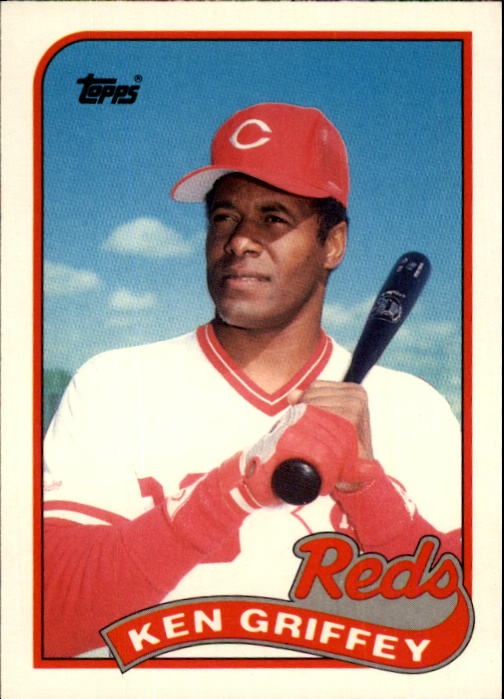
Ken Griffey Sr. 1989 Topps Traded


On June 13, 2016, I received the above card in the mail. I took to Facebook to write this:

Another visit from the BCB, dropping off one of the last parts of the Big Red Machine: Ken Griffey Sr. -- though it would've been cool to get an 89 Upper Deck Ken Griffey Jr. 
Couple of things about KGS: I always assumed he was a slugger. Nope. Turns out his high in dingers was 21 in 1986. 
He was a great fielder. I remember him climbing a wall and robbing Marty Barrett of a homer in Yankee Stadium. Double freedom rockets to Barrett. 
He had another son, Craig, who never made it to the Bigs. Must've been awkward at Thanksgiving around the Griffey table. All-in-all, KGS was a good guy to have on your team.”

Sports never stop. The way that seasons keep going and going, it’s like a speeding train. Each year is like a car connected to the engine. When you finally make the decision to jump on that train, you’re going to find yourself in a car that’s going to be different than the previous car (season). This is true with players.

To continue the train analogy, I jumped into baseball in time to grab the 1986 car. The way that I was able to acclimate myself was through baseball cards. When I got a Ken Griffey Sr. card, I thought of him strictly as a Yankee outfielder. From the back of his card, I knew that he played for the Reds, but as far as I was concerned he was a Yankee. In contrast, someone who jumped on the sports train in 1976 remembers Griffey as a Red. For them, he’ll always be a Red no matter if they see him as a Yankee or a Brave or Mariner.

With that as a background, seeing Griffey as a Red was pretty special to me. By the time I had this card, I knew a lot about baseball history and understood that the Big Red Machine was a really big deal. Seeing Griffey back in his Cincinnati Red was cool, it was almost like getting into a time machine and remembering that, oh yeah, Griffey made his name as a Red. I was able to go back in those train cars, just for a little bit. Hey, I like going home again, even if it’s never the same. Therefore, I liked this card a lot.

By the time this card was available, Ken Griffey was the hottest name in baseball. It wasn’t because of Ken Griffey Sr. though, it was because of his son, Ken Griffey Jr. Playing in the Pacific Northwest, Junior burst on the scene with a bang in 1989. He seemingly could do everything: he could hit for average, hit for power, he could run, he could field (holy shit, could he field) and he had a pretty good hose. Ken Griffey Junior put baseball on the map in Seattle. People cared about Mariners games like never before. Seattle tickets were hard to come by due to Griffey’s star power.

Every once in a while, a star comes along and sets baseball on fire. But what was interesting about Griffey Jr. wasn’t that he was only a star, it was that his dad was still playing baseball at the same time as he was. Baseball is the ultimate father-son game, how many tear stained stories were written when Kevin Costner wanted to have one last catch with old man a year prior during “Field of Dreams”? Major League Baseball pushes the father-son dynamic so hard that it kind of shoots itself in the foot with the syrupy nostalgia that it uses as the focal point of its marketing campaigns. At some point in a teen’s life, the kid starts to exert some sort of independence from their dad.

But this was different. Ken Griffey Jr. was young when he made his debut (he was 19-years-old when he started) and he played the game with a youthful exuberance. He wore his hat backwards! and that made a lot of sports writer’s monocles drop into tea cups. “How dare he disrespect the game by wearing his baseball cap backwards? This hip hopping of baseball is dreadful!” But kids didn’t care, they saw Junior’s smile and sweet swing and wanted to be like him.

Aside from Bo Jackson, there was no other baseball player that was cooler than Ken Griffey Junior.

On the other side was Griffey Sr., he looked like your dad. He was pudgy, seemed a little ornery (especially in comparison with his son) and was a little slower than how he used to be. Every so often he could use his dad-strength to hit one out of the park, but he looked as if he needed oxygen at second base to continue his home run trot. In 1990, the Cincinnati Reds* cut Griffey Sr. From what I remember, they did it because there were a lot of people clamoring for the Griffeys to play in the same outfield. Father and son, one in left, the other in center. The old guard and the new guard. Dad, let’s have a catch to warm-up!

* You know what I never thought of before, that 1990 Reds team won the World Series that year. Griffey was released on August 24 of that year. I would bet that Griffey would have been on that team’s postseason roster. He may not have played a ton, but he was a part of the team that long, why wouldn’t he have been there. I’m not sure if Griffey asked to be released, but if he did, he gave up a World Series ring to play with his son. I know at the time, the Reds weren’t considered a slam dunk to win the World Series, but man, that must’ve been a tough pill to swallow. Though, I suppose that’s the sacrifices you make when you’re a father.

The Mariners said yes and the two were teammates. I wrote in the blog about Marty Barrett how cool it would be to have a brother in the Major Leagues while you were there, but a father in the bigs? How awesome is that?

The Griffeys played more than a handful of games together in 1990 and 1991, before Ken Senior called it a career in 1991. But the duo amped it up on September 14, 1990 in Anaheim when Angels starter Kirk McCaskill served up homeruns to both Griffeys in the same game. Not only did they homer in the same contest, but they went back-to-back. I remember being dumbfounded by this.

I stole this picture from the following week’s Sports Illustrated from my high school library and stuck in my locker because I thought that it was so cool.


(This might be one of my Top Five, all-time baseball photos. I love it.)

The only other father-son duo was the mirror image of the Griffeys: the Raineses. Tim Sr. is a Hall of Famer and his son, Tim Jr., is not. They played a few games together for the Baltimore Orioles, but it wasn’t the same. Not only were they second but they never hit back-to-back bombs either.

Griffey Sr. wasn’t a superstar and he was never the best player on his team. In fact, he may have been the seventh or eighth best player on that Reds team, but that says more about how stacked the 1970s Cincinnati squad was more than Griffey’s talent level. But he was the last of the Big Red Machine standing and he achieved something that none of them could ever do: even a decade plus after the team was gone, he was the coolest member of that Reds squad ever.  

BTW, if you’re interested, Craig Griffey made it to AAA in the Mariners organization. He ended up retiring after he was sent down to AA after a few games. His pro baseball highlight had to be playing alongside his brother in a handful of Spring Training games back in the 1990s. I know that I kidded a little bit above about an “awkward Thanksgiving” but the dude went higher in pro baseball than 99.98888% of people who swing a bat. That’s nothing to overlook and in any other family, he’d be the greatest athlete produced.

But he was a Griffey and no matter how much his mother loved him, if she was starting a team made up strictly of Griffeys, I can guarantee you that he’d be picked no higher than third. That’s cold.