Showing posts with label Entourage. Show all posts

Friday, November 14, 2008

34.Original Adult Swim


At the dawn of time, man did not possess the power of automatically taping his favorite television programs and watching them whenever he felt. Thus, if a program aired during the later hours of a night before that man was to wake early, two choices had to be made: stay up late, watch the show and be tired the next day or skip the program entirely. *

* Of course, the man could buy a VCR that taped on a timer, but as stand-up comedians have told us time and time again, these things are IMPOSSIBLE to figure out.

This is the backdrop of the four 15-minute shows that were began airing on Adult Swim, a late-night block of cartoons on Cartoon Network, in late 2000. The four shows are: “Sea Lab 2021”, “Aqua Teen Hunger Force” (ATHF), “The Brak Show” and “Harvey Birdman, Attorney at Law” and they usually began airing at about 11:30 at night. For a late 20-something-year-old with a 9-5 job the shows had to be pretty good to get me to watch them.

Fortunately, they were. As an aside all four had awesome opening themes that were distinctively different but awesome in each sense.

Each show was different, but they all shared the same surreal, absurdest type of humor where continuity means nothing (except in certain cases) and absolute destruction of the characters or their homes was usually the punch line and ending to a majority of the episodes (except for Harvey Birdman).

“Sea Lab 2021” was a continuation of the Hanna-Barbera early 1970s eco-friendly and very serious (and quite boring) cartoon “Sea Lab 2020”. In SL2021, a year has past since the crew has been underwater and they have begun to go mad. Usually their madness was started by some ridiculously trivial pursuit by Capt. Hank Murphy and ended in the total destruction of Sea Lab. In the initial episodes, cells and frames from the old cartoon were used and manipulated with new dialogue and story lines. These were a lot more cutting and crude than the benign originals and were a terrific send up of the placid, boring (I mentioned that it was boring before, right?) original.

“The Brak Show” also took a chapter from an old Hanna-Barbera character, the space-cat pirate arch enemy of Space Ghost, Brak. In this program, Brak was reimagined as a typical naïve sitcom son with a wholesome 1950's-style mother (who looked like him) and a miniaturized Spanish father that sounded a lot like Ricky Ricardo and gave terrible advice. Brak was joined by another Space Ghost villain, Zorak, who is a gigantic preying mantis with the personality of a psychopathic Eddie Haskell. Each episode centered around Brak getting involved in various sitcom-esque scrapes and getting out of them by strange and often violent means.

“Harvey Birdman, Attorney at Law” was probably my favorite show of the four. Like Sea Lab and Brak, the vaults of Hanna-Barbera were mined and there the creators found a fairly lame, late 1960s hero—Birdman—had him retire and transformed him into an over eager defense attorney. Instead of faceless clients, Birdman would defend Hanna-Barbera characters against very adult charges—such as Shaggy and Scooby Doo getting busted for marijuana or Fred Flintstone being the head of an organized crime syndicate. Villains from the original Birdman show would play the opposing prosecuting attorneys and judges. In this series, continuity mattered more than the other three.

“ATHF” is probably the most popular of the four original shows (a movie and two video games were made of the series) and centered around three anamorphic burger stand foods: a shake (Master Shake), a box of french fries (Frylock) and a meat patty (Meatwad) and their next door neighbor, Carl. Master Shake was the antagonist of the program and his obnoxious demeanor was the one that fueled the show's adventures, whether it was cruelly picking on Meatwad or finding another get-rich-quick scheme. Frylock was the conscious of the group, while Carl and Meatwad were the pathetic recipients of Shake's insane plots.

I'm going to look at these shows through one prism, as going through show-by-show-by-show is a bit time consuming. As a whole, the first two seasons of each of these shows are awesome, some of the greatest examples of absurd comedy that you're going to find. It featured a few retro-cool voices that were able to take shots at themselves (the real voice of “Fred” played Fred in the Shaggy and Scooby get busted episode of “Harvey Birdman” and Erik Estrada constantly poked fun at himself as one of the main characters on “Sea Lab”) and there were a lot of comedians who lent their voices to various characters (David Cross in an episode of “ATHF” and Stephen Colbert in “Harvey Birdman”). The shows all stayed really close to their original ideas and while the plots could be considered “out there” there was some tether to a sort of reality.

Another thing that all four of these shows had going for them is the references to pop culture. They all seemed to strike on the askew side. For example, "ATHF" had an episode built around a belt that contained the powers of the forgettable "super group" Foreigner. Hip hop and other "slacker" touchstones, not normally woven into other shows, were prominently featured in the many of these cartoons. It's as if the producers were one of us.

As the seasons went on and stories and plot lines were becoming harder and harder to come by and experimentation was growing, many of these shows began to lose their way. The first show that saw a downgrade in quality was “The Brak Show”. This show was originally centered on Brak and Zorak, his father (simply named Father) was used as comic relief through his non sequiturs of advice but was never the main star. Somewhere between the second and third seasons, the roles shifted and Father became the star and Brak was more of a supporting character. Like Ari Gold in “Entourage”, too much Father became a bad thing and the series limped to a close, hardly resembling the original show.

This also happened with “Sea Lab 2021” when the producers decided to abandon taking the old cells from “Sea Lab 2020” and synching up new dialog. Instead they created new animation that had its pros and cons. The main trade-off was that the characters were able to get into new situations outside of what H-B originally had done, but I'd argue that was made the original seasons so interesting. It was cool to see what the producers could do with such a lame show. Also, Barry Groz, who did the voice for their best character Capt. Murphy passed away during the show's run and was replaced by his real-life son who did a completely different character. This character never really seemed to fit into the crew and the show was cancelled a season later.

As far as “ATHF” goes, there are a lot of things that are great about the show but now in it's eighth season, things are a bit stale. The characters haven't really changed too much, though the situations are a bit more bizarre. I'd say that out of all four shows, this is the one that broke the tether to some sort of reality and strayed the farthest. And really, there's not a lot of reality when you're watching a show about a talking milk shake, but the pop culture jokes that were rampant in the first few episodes became lost as the series wore on.

“Harvey Birdman” didn't lose its way until maybe the last season, but that's because one of it's stars, Steven Colbert, had to leave the show for his own show, “The Colbert Report”. Also, with over 50 episodes, it seemed as if they were running out of characters to spoof. I'd say that this was probably the most entertaining of all four shows and the one that kept the quality up from the beginning of its run to the end. I'm sure that's not a coincidence.

The one thread that seems to run through all of the shows is that in my perception the quality went down hill as they became more accessible to me. Around the second or third seasons of these series, I got a DVR for Christmas. The first shows I set up to record were these four shows, mainly so I didn't have to stay up until 1:00 am on a Monday morning to watch a bunch of cartoons. I was now able to watch them whenever I felt like it.

I guess that some of the shine was taken off when watching these programs in the light of “normal hours”. Also around this time, more and more people were finding out about them and enjoying them. Every person who “finds” a band or television show feels a twinge of sadness when the “mainstream” finds out about them. And eventually the sadness turns to a form of bitterness when “original” fans lecture to the newbies that things aren't the same as they used to be.

The fact is, maybe they are still the same—the viewer is the one that has seen his tastes and life change. By the time I stopped watching the first runs of these shows, I wasn't a slacker bachelor living in a Wakefield apartment with two other guys that I had never met before. I was a married man with a wife and a career. Wondering whether a french fry would fire lazers at a robotic rabbit (called Rab-bot) was getting to be the furthest thing from mind.

That being said, those cartoons are still being recorded on my DVR and every once in awhile, when I'm feeling nostalgic for a time where I didn't have as many responsibilities, I'll watch them. And if it's the first few seasons, you bet that I'm going to laugh my ass off. Because these aren't just shows about space cat pirates or insane members of an underwater laboratory, it's an often overlooked part of life—those strange, confusing years between college and marriage.

EDIT: The last two entries have been about shows that I once liked and now found fault with. I've been thinking about these past two entries and their negativity for a few days now, and it hit me why I'm being so uber-critical. It has to do with a lot about what I referred to in the pervious paragraph.

The reason why I like these shows is because they mean something personal to me, not in the specific “this-episode-was-so-awesome” or these characters are the best,. When I watch an old episode of “Entourage” or “SeaLab 2021” it takes me back to a time when I was just married or I was a person without a clear future. It's a nostalgic trip to the recent past where I get to relive a good part of my life.

Lots of people have this sort of nostalgic, moment in time connection with music and I have it with television. Every show on this list is a mile marker for a point in my life. As I still pass these markers, I can still see the chipped paint or their irregular shapes as I pass by and I feel that I need to point them out. The ones in the past, I forget about their imperfections and gloss over their inadequacies, instead remembering them in an ideal—almost perfect—form.

I'm sure when I revisit this list in a few years, I induct new shows and raise current shows on to a pedestal of perfection. So please take any new criticisms with a grain of salt.

Saturday, November 08, 2008

35. Entourage


When I put this list together about a year ago, “Entourage” was coming off of an uninspiring extended season and I was a little concerned at how the rest of the series would play out. However, I wasn't deterred for a one main reason.

I believe that the show got really popular very quickly, so HBO asked for more episodes to run alongside the last season of “The Sopranos” giving them a solid Sunday night line-up that did very well in the ratings. The way I looked at it, HBO saw that Sunday rotation as the 1986 Boston Red Sox starting rotation: you have one of the all-time greats as your number five starter (Tom Seaver in “The Sopranos” role) and you have a future all-time great as your number one (Roger Clemens as “Entourage”), a torch was going to be passed.

Fans of the old show would watch the new show and vice versa and HBO would keep it's strangle hold on Sunday nights. And to a degree it worked. The one unintended side effect is that the writers for “Entourage” couldn't keep up with the extended season, so there were a couple of clunker episodes and they were starting to believe their own hype. They were throwing everything at the wall and they didn't seem to care because “they're the new hot show”. At the time, I thought that cooler heads would prevail and that it would be no big deal.

But it is a big deal, the show is currently in its eighth episode of the new season and aside from some better scenes and marginally better episodes, this season is maybe a half-grade better than last. Chances are if I was creating this list this year, “Entourage” would have ranked much, much lower.

The question that I look to answer is whether two great early seasons outweigh one crappy and one meh season?

Let me first state that I never got into the whole “Entourage” scene with the first episode. I had heard that Mark Wahlberg was producing a show that was loosely based on his life and experiences when he and his buddies moved from Boston to Hollywood. I thought that it was going to be a vain ego project detailing how great he and his pals are and how every decision he has made is unquestionably the correct one. So I ignored it.

About a year or two later, I was talking to a friend and he was telling me about the show and when I gave him my uneducated opinion of an unwatched show, he told me that the show wasn't like that at all. It was an interesting look at the life of a young star, his washed-up half-brother and their two friends. He pleaded me to watch it because it was well-written, well-acted and there wasn't a lot of heavy lifting. Plus, he said, Jeremy Piven's character (super agent Ari Gold) steals every scene that he's in.

Intrigued, I Netflixed the first season and my wife and I were instantly hooked. We buzzed through the first season in about a week (curse Netflix and their slow deliveries) and we were going so fast through the second season that we weren't waiting for Netflix any more, we were going from Blockbuster to Blockbuster trying to find the discs that we hadn't seen yet. We were like crack heads—actually, that's too much of a boring cliché now. What's the popular drug that kids are doing now—methamphetamine! We were like meth heads looking for the next hillbilly to turn us on.

We cruised through the first half of the third season and were more than pumped for the second half of the third season and fourth season which ran back-to-back. That's when the bad times began.

Here's a hard and fast rule, the more that a show is hyped, the suckier it will be. And “Entourage” stuck to that rule.

The show was becoming trite and predictable and worse yet, there wasn't much of a direction. Yes, the over-arching plot of the season is that Vince (the series' main star and de facto Wahlberg) becomes the number one movie star in the world and bets his entire career on a project (the life and times of Pablo Escobar in a flick called "Medellin") that most studios didn't want to touch. Add to that mix that Vince wants his director, the obnoxiously demented Billy Walsh, to film the piece and you have the ingredients for a new star's abject failure.

And it was.

This wasn't the reason why the show stalled. Having Vince knocked off his pedestal was a stroke of genius and a bit of realism. However, the writers couldn't seem to come up with anything fresh.

Vince's best friend, manager and conscious of the show, Eric is becoming more and more of a Hollywood player and becomes one of the movie's producers after sinking everything he owns into the flick. He and Vince have their squabbles, as do he and Billy. The fights become more and more repetitive as the weeks go by. Billy calls Eric a “suit”, Eric gets his panties in a bunch and says something to Vince about the way Billy treats him and what his negative opinion of the movie. Vince says “If you don't believe in me or the script, you can have your money back”, Eric says he believes in Vince and they make up. Until the next week. Lather, rinse, repeat.

Problem number one: repetition.

In many of his fourth season scenes, Ari isn't interacting too much with the boys any more. This is a big problem because Ari by himself is boring. The best part of Piven's character is when he's losing his mind, yelling and screaming at people and acting like an uber-prick. For some reason, this is very endearing to the watcher (myself included) and Piven won an Emmy for this character. I think that he went to the writers and told them that he doesn't want to be a one-trick pony and to flesh out his character, or maybe they came up with this idea on their own. I don't know, but they did do this.

Instead of an alpha agent dick, we get an alpha agent dick at work and a neutered puss at home. I guess this dichotomy is supposed to add some layers to Ari's personality. It doesn't. It just makes him tough to take seriously. And I'm not blaming the writers one bit for this as Ari Gold is easily the best character on the show and they needed to expand his role. They couldn't go for the always yelling, always obnoxious character at home and at work because that would get annoying after just 10 minutes and for some reason sympathy (we wouldn't have sympathized with a constant screamer, I guess) equals character depth. So they went the other route.

Changing the show's focus is never a good idea, it ruined “Happy Days” when it went from being about Richie and his buddies to Super Fonz. Fonzi was once the coolest guy in Milwaukee, he didn't have a back story because he didn't need one. All of a sudden people were obsessed with Fonzi and wanted to know what made him tick. When the writers pulled back that curtain, they showed that there's an awful lot of stuff you don't want to know about Fonzi. To make up for that vulnerability, at the same time they made him even larger than life.

The writers did the same thing with Ari. At this point I wouldn't be surprised if Ari jumped four buses on a motorcycle out front of Arnold's hamburger stand.

Problem number two: Blowing up the ancillary characters and giving them contrasting depth.

Another thing that was done way too often in this and last season is the establishment of plots that died quick and anonymous deaths. For example, for two episodes, Turtle (a neighborhood friend who acts as a gofer for Vince) spends considerable time buttering up the father of a girl he wants to date. He finally gets the dad's blessing and after another episode gets date. The two have a good time and it seems as if the perpetually loveless Turtle has found his woman. Next week, we hear nothing about her. Nothing is said about this girl for the next three weeks. She's completely dropped from the show without explanation. To use another “Happy Days” analogy, she's the Chuck Cunningham of “Entourage”.

The other member of the group, perpetually clueless Johnny Drama (Vince's half-brother struggling actor) unexpectedly becomes a big television star. His story lines are even more infuriating as there are three or four plot lines that dropped off the face of the earth for him too. Same thing with Ari's assistant Lloyd.

As “The Sopranos” proved, not every plot needs an ending. As in real life, some times things just fade away. I completely understand that, but when you spend a better part of a season building up story lines and don't follow through that's not artistic license, that's giving your viewers blue balls. And after a while, when you do begin new plot lines, fewer people will care because they've been conditioned to believe that it doesn't matter. Who is going to invest time to care about a character when there isn't a pay out?

I've read that the reason for the dropped plot lines and the choppy story telling is due to the fact that there has been a lot of turnover in the writing staff and the producers were bringing in people who didn't understand the characters very well or don't really know the show's history. Whether that's true or not, there should be someone who has been there since day one going over scripts to make sure that everything fits into the Entourage universe.

And it's not just in the plot, there is no consistency in character development. One episode something significant happens and the next episode it's forgotten. The writers bring all of the characters back to square one, and this year Drama even said, “Well I guess everything is the same as its always been ... we're all back to where we started.”

Problem number three: lack of consistency.

With all of these complaints you'd wonder why I'd even watch this show week after week after week. The reason is simple, the show was awesome when it first began. There was a sense of fun and levity, a great way to end the weekend. Not a lot of thinking, just the continuing story of a few lucky friends that are going through life much like every one else—albeit in a very heightened material state of existence. Add in a bit of “I-may-have-been-able-to-do-what-they're-doing-too-if-I-really-worked-at-it-and-took-a-chance” escapism that also came with each episode.

I watch every week to get that feeling back. Yet, aside from a few glimmers here and there, I've never seen it.

The show can be saved. It just can't be done lazily. The show was on the teetering verge of being completely shaken up this year when Ari was going to accept a $10 million dollar a year salary to be a studio head. Yet, he turned it down because he likes Vince too much. Never mind that for 40+ episodes we've been conditioned to believe that Ari was a take-the-money-and-run agent who thought of his wallet first and everything else a distant second. In two seasons filled with questionable character traits, this is the biggest one. It almost seemed as if the writers looked at themselves and thought that they had written themselves into a corner. They didn't, they wrote themselves into a new room, but couldn't find the light switch, so they went back to their old, safe room.

Back to my point, it was on the verge of changing and then the writers reeled it back in to where it began, which is where Drama's line came from. The writers need to stop writing lazy and move things forward. I am no Hollywood insider, but I'd be shocked if a star's life is as stagnant as Vincent Chase's. After the Escobar debacle, the writers tried to have him start from the bottom but they brought him back too quickly.

They also have to understand what they have, the viewers like the characters, don't turn them into caricatures of themselves. Let them grow. Each week that Turtle and Drama find themselves in a sitcom-y situation, cheapens what the show has done. The writers shouldn't be afraid to allow Turtle to find some self worth or for Drama to stop acting liking a jackass.

After awhile the viewer starts questioning why the characters like each other and from there it's only a short jump to the viewer asking himself, “Why am I watching this show?” and turning to Sunday night football.

Tom Seaver would not approve.

Tuesday, April 29, 2008

36. Deadwood


In their music Led Zeppelin has sung a lot of world-wide, common sense truisms, such as: “If there's a bustle in your hedgerow, don't be alarmed now. It's just a sprinkle for the May queen.” I can't tell you how many times a day this piece of advice saves me from being alarmed. But this quote, “It's been a long time since I rock and rolled”, best fits in with the tardiness (as in late, not retarded – though you have to read this entry to weigh in on that) of my posts of late. Life, kids. Life sometimes gets in the way of writing.

Let's shrug off the day-to-day weight of life and get down to why we're here, to slog upwards to the top of the mountain of television greatness. Please don't forget that I am your Sherpa guide and in this entry, we're going to make a base camp at the summit of the HBO western, “Deadwood”.

Traditional Westerns have never done it for me; I didn't like “Bonanza” or “Wagon Train” or anything starring John Wayne. The whole genre seemed a little too hokey for me; the bad guys are always wearing black hats and the good guys in white always riding to the rescue of a town. The only payment for the good guys is the faint whiff of sweet lady justice—and the ability to put holes in people without getting tossed in the clink. And the rest of the characters were equally cartoony: the damsel in distress, the grizzled prospector, the pussy-assed “law man”, the savage Indian.

All of these people had flimsy excuses for living and had even lamer reasons for doing what they did. Why is the good guy good? Why is the mayor so lilly-livered? There was never any backstory or any shades of grey in westerns; good was good, bad was bad. That's just the way it was back then.

But was it really? Of course not. The west was the last bastion of no-man's land on this planet. Men who needed a new beginning or a change from the East or who were interested in making their fortunes fled to west because everything was up for grabs out there. Like to have sex with prostitutes for 50 cents? Come out to the west. Like to drink your weight in booze? Come out to the west. Like to kill Indians or want to be the boss of a boom town? Come out to the west. Don't want to work in a factory where your arms could get ripped off? Come out to the west.

These are some of the themes that “Deadwood” delved into. This show wasn't set up like the traditional westerns of the past, and that's what was so great about it. The one thing that traditional westerns glazed over was that there wasn't any “civilized” rules in the wild west and people acted upon it. Sex, drugs, drinking, swearing, killing—these kinds of things happened every day in “Deadwood” and it probably happened every day in “Bonanza”, yet the viewers weren't allowed to see it, or hear about it. Because of this puritanical attitude that was prevalent during the majority of last century,“Deadwood” is probably the best mirror to what the real post Civil War west was like.

I know that societal mores were different when the western was the popular form of entertainment, but how could an audience not question the actions of the men portrayed in a truly free society? “Deadwood” shows the type of lawlessness that happens when man is not governed by some set of rules.

There are a ton of characters in “Deadwood”; some real, some fictional. Calamity Jane is a lesbian drunk (which makes sense if you think about it), Wild Bill Hickok starred in a few episodes before he was shot in the back; but the two characters most focused upon are Sheriff Seth Bullock and Al Swearengen. Bullock comes to Deadwood, South Dakota with his partner Sol Star to open a hardware store because he is sick of being a lawman in his home town. Swearengen is the muscle that runs the local brothel and the rest of the town (unofficially, of course).

The two square off in the first season, realize an uneasy truce in the second season—when Swearengen has to mobilize to fend off Cy Tolliver, the proprietor of even shady business dealings and a new whore house that has been cutting in on Swearengen's business. Tolliver is small potatoes compared to the menace that shows up midway through the second season: George Hearst. As Hearst makes himself home and begins to summon his men to claim this town for his own—strictly for the gold in them thar hills—Swearengen and Bullock both agree that this isn't good for them and indirectly the people of Deadwood and mobilize a counter attack.

Those two paragraphs do nothing for the intricacies of each episode as there are often four to five plot lines running concurrently that may effect each season's story arc. I believe that what creator David Milch wanted to show is that like today, the west wasn't cut and dry. These were not people who had one moral compass; even the “good guys” do things for their own selfish reasons and that doesn't make them bad. And for the most part, the bad guys (even Hearst) aren't completely and totally bad.

Hearst is set up to be the villain purely because he arrived at Deadwood a few years too late. If he had taken the initiative and Swearengen had been lax in getting to South Dakota, the roles would be reversed. Like many HBO programs (“The Sopranos”, “Rome”, “Big Love” and even “Entourage”) everything comes down to power and how you protect it. Swearengen and Bullock don't want to give up their power and will do everything they can to keep it. That means that the sheriff may have to get dirty with the pigs in some cases.

Also, it is my belief that Milch sets Hearst up as the personification of progress and change; bringing the east out west. His character was like many of the factory owners, oil or land barons of that time where they were made rich off the sweat of the working man. They were unsympathetic towards the plight of their workers and treated men like raw material. Hearst does the same thing, only in the wild west there are people to try and stop them. Ultimately, Swearengen and Bullock will learn that they can't stop progress. If Hearst is halted, then there will be another and another and another until the “civilized” world is brought to South Dakota and their lawless paradise is destroyed.

There are also themes running through the three seasons: how women were treated (poorly, but with some respect), how black people were seen following the Civil War (a lot of the western settlers were soldiers from both sides of the conflict and thus their interactions are tempered by that), how the Chinese were treated (very poorly, almost subhuman—though Swearengen was intelligent enough to strike a bond with the Chinese ghetto's leader Wu). Even issues with children, Jews, the handicapped (played by former “Facts of Life” star Geri Jewell—another terrific character is played by follow 80s sitcom alum, William Sanderson as dim witted, puppet “mayor” and hotel owner E.B. Farnum. Sanderson played Larry—not Daryl or his other brother Daryl—on “Newhart”.) and other immigrants are brought to light in this series.

There are two hurdles to jump regarding this show: the cadence and quickness of each speaker is tough to pick up during the first episode. You begin to grow an ear for deciphering what each character says, understanding Deadwood is almost like understanding a different language. The other hurdle—and this is a big one—is that show never was given a proper send off. Once the third season concluded, it was thought that despite low ratings, “Deadwood” was going to get either a full or half-season to tie up loose ends. Then it was decided that Milch was going to work on his new series, “John From Cincinnati” (which was terrible) and wrap up “Deadwood” with two movies. That never materialized either.

So unless something happens soon, we are left to wonder what happened to the all too human inhabitants mining camp that tried their damnedest to stop civilization.

Thursday, February 21, 2008

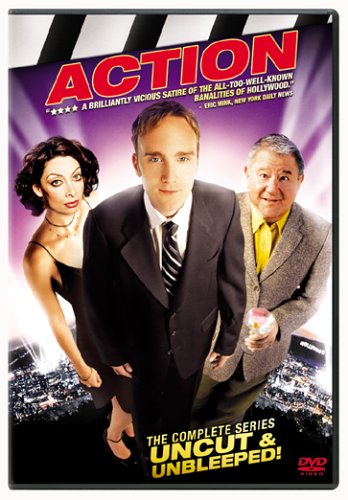
43. Action


This is going to be the shortest entry on a show that I'll be doing. The reason is not because I don't like the show “Action” because I do, it's because I don't remember much about the particulars of each episode. In fact, I was toying with taking it off the list but as I was researching the program yesterday, I started to remember that there were a lot of things that I liked about the show and how it has a strong influence on shows that I love now.

To begin with, this was another one of those “risky” FOX shows that makes FOX look awesome to TV geeks like me when they send out press releases about the new “daring” show that takes “a lot of risks” and is “edgy”. The ultimate problem with these types of shows is that FOX usually doesn't have the balls to stand behind it and face the inevitable low ratings or backlash from the flyover state viewers that don't particularly like or understand the program. And before I'm besieged with emails and comments telling me that I don't get the TV business, I do. Shows are only on television to get ratings which in turn make money for the network. Basically, they're the filler around all of the advertisements.

If a show flounders, you're finished. I understand that. It's just that FOX had to know that most of America wouldn't take to Peter Dragon at all. Dragon is the main character of “Action”, played by Jay Mohr who did his best job of acting for his whole career with this role. He's a slimy, douchey producer that got his start writing scripts for gay porn movies and may or may not be a homosexual himself. The second lead is a former child star who ends up with a major coke problem and is a high-class bisexual hooker—though she does have that heart of gold. By the way, Illeana Douglas is fantastic in this role too.

Forget the gay stuff, most Americans don't like to watch a show where the main character is a jerk and the other main character is a hooker with a drug problem.

Look at a show like “Big Brother”, know why it's not a gigantic hit here in the United States (unlike in Europe)? Because when it comes time to vote the cast members out, Americans always knock out the biggest asshole in the house. These people are usually the ones that you want to see on television, they're the ones who make the show interesting. The good people are the ones who make the show boring and flavorless. I firmly believe that if “The Sopranos” were on network TV, it wouldn't have lasted a season for this one reason.

But it's been ingrained in our heads since we able to watch television, you can not root for the bad guy. When Henry Hill introduces Jimmy to the audience in “Goodfellas” he said that “Jimmy is the type of guy who wants the bad guys to win in the movies.” For most, that's a gigantic character flaw.

So the main character is a jerk. That's one strike. The show is about the inner workings and the gross underbelly of Hollywood—a lot of the plots were taken almost verbatim from stories told to creator Chris Thompson and producer Joel Silver. Like I wrote about in my entry on “Grosse Pointe” many people don't care about the goings-on behind the Hollywood sign. They are simply not interested in seeing how the sausage is made. The show has to have some other kind of dynamic to hook the audience in, otherwise it's finished. “Action” didn't have another dynamic. That's strike two.

Strike three was its time slot: it was on Thursday nights after “Family Guy” at 9:30. Since the mid-80s, NBC has pretty much owned Thursday nights, so the audience that FOX was looking for: young, urban, up on pop culture was probably watching “Friends”, “Frasier”, “ER” and whatever garbage that NBC threw in between the three shows. Furthermore the lead-in to “Action” was “Family Guy”. Which is a decent show, but the same audience that watches “Family Guy” isn't going to appreciate “Action”. They are simply too different and appeal to vastly different audiences. And “Family Guy” wasn't the hit for FOX that it is now. It bounced all over the place and never won a strong audience until it was rerun on Cartoon Network's Adult Swim. Then it was brought back to FOX and turned into ratings gold. In 1999, it was just another “Simpsons” clone that never caught on.

After eight episodes shown over four months (FOX does another stupid thing by premiering their shows in September and then having an October hiatus for the World Series, it's a gigantic momentum killer) the show was out and “Action” bid adieu.

Here's the thing though, I think that “Action” had a bigger impact than most people give it credit for. Without this show, HBO's hit “Entourage” doesn't exist. Jeremy Piven's Ari Gold is essentially the agent's version of Peter Dragon only without the sexual confusion. He's loud, abrasive, obnoxious—he's a dick. But the good thing for Piven (and the crappy thing for Mohr) is that Piven is on HBO where they have a string of shows where the main character is a jerk. From “The Sopranos” (the aforementioned Tony Soprano) to “Curb Your Enthusiasm” (Larry David) to “The Wire” (Jimmy McNulty), none of these people are men that you'd like to see your daughter date. But, they are among the best created characters of the last 15 years.

The show also set the scene for some of “Arrested Developments” funniest gags as “Action” was among the first to have the characters curse, but the offensive word is bleeped out, though the audience understands the message being conveyed. And it was among the pioneers of uncomfortable humor that makes shows like “The Office” or “Ali G” work so well.

All 13 episodes of the show are available on a DVD set, and most times it can be found pretty cheaply. Do yourself a favor and watch one of the shows responsible for the genesis of the more edgy and uncomfortable brand of humor that shows up from time to time on network and cable TV. It's well worth your time.

Tuesday, February 05, 2008

47.Grosse Pointe


This entry is going to be about as long as the episode run of the series that I'm writing about: short. “Grosse Pointe” was a low-rated show on a little-watched network that started broadcasting in September 2000 and ended in February of 2001, lasting all of 17 episodes. If you're a fan of the show, you're a member of a small club that got to see a smart and subtle program that probably gave it's audience too much credit for their intelligence. The basic premise of the show was that it was centered on a group of actors who starred in a ripoff of “Beverly Hills 90210” and how they dealt with the Hollywood lifestyle and each other. Like “Entourage” or “30 Rock”, it was a show within a show.

Created by Darren Star, the guy behind “90210”, GP focused more on the behind-the-scenes stories that Star felt was way more interesting than anything that he was writing for 90210. You might remember that there was a little bit of controversy when this show first aired, as Star based one of the characters on Tori Spelling. Apparently, Aaron Spelling thought that this portrayal showed his daughter in a bad light (she was written as dumb as a post) and ordered Star to rewrite the character. Star complied and the Spelling character (named Marcy and played by Lindsay Sloan) turned out to be the defacto star of the show.

As an aside, I never bought into the hype and thought that Spelling was doing his old friend a favor by trying to get a little hype whipped up and it probably worked for an episode or two. The problem was any hype was short-lived and the ratings plummeted.

There were a multitude of reasons why this show failed. One was that the show wasn't clearly defined; is GP a drama? Is it a comedy? Is it both? This may have confused the WB core audience, which at the time were mostly teenage girls. During this time “Dawson's Creek” was a run away smash hit and “Seventh Heaven” was doing well for them too. Both of those shows were similar in their easy-to-follow story lines.

And how do you market a subtle satire aimed at a genre that they love? It would be like joining Sportscenter and ripping apart the sporting world while you were showing the highlights. Furthermore, the audience for teen dramas are teenagers. If you were going to make fun or show the behind-the-scenes action of a teen show how can you get people who don't like those programs to watch a program that is about them?

Despite these questions, the WB may have been emboldened with the modest success of “Buffy the Vampire Slayer” which paired smart writing with good acting and thought that these two ideals will carry “Grosse Pointe”. I'm just making a broad assumption here, but with “Grosse Pointe”, the completely underrated cartoon “Mission Hill” (more on that show later) and the ironically titled “Popular” all launching around the same time, it seems to me that the WB gave their audience too much credit. All three had subtle plots that focused more on character development and wit rather than a bunch of pretty faces and recycled plots.

Also the problem with a BVS comparison is that Buffy has one defined genre: fantasy, that has a gigantic following. There is really no cross-over so that if you like fantasy-based shows, you watch Buffy; if you don't, you find something else. With a show like “Grosse Pointe” there was never a chance to grab the folks who like comedies or the people who like teen dramas because the former is too broad of a market and the latter is too narrow a market.

I enjoy shows that show the behind-the-scenes action of Hollywood, like “Entourage” or “30 Rock”, but this is a very narrow audience and those shows have something that “Grosse Pointe” didn't have: it never mixed messages and standout characters.

“Entourage” is a show about the movie business and Jeremy Piven's Ari Gold is a character that people talk about and want to watch. On “30 Rock” you're behind the scenes of a sketch comedy show. Previous to “30 Rock” the first time most of the public met Tina Fey, she was behind the news desk of “Saturday Night Live” and so it makes sense to all that she would be on a fake sketch show. Plus Alec Baldwin and Tracy Morgan who are among the best characters in prime time today. There were none of these things on “Grosse Pointe”, because while the characters were terrific, they weren't particularly memorable.

That's ok. As I alluded to earlier, it was well written and the cast did a good job of getting into their roles. The two standouts were Sloan and Irene Molloy who played the Shannen Doherty character with great aplomb. Since “90210” was a guilty pleasure, it was fun to watch “Grosse Pointe” and which characters were the doppelgangers of their 90210 counterparts. One of the funnier running jokes (and Star insists that this was a joke) was that character based on 90210 patriarch Jim Walsh was secretly gay and wanted his “son”.

While this isn't a top echelon show, it was a decent take on the behind the scenes shenanigans at a television show. Whether the mistakes of “Gross Pointe” completely shape the aforementioned hits of “Entourage” and “30 Rock”, I'm not sure. But I do think that it was a help. If you ever come across the DVDs in a cut out bin or see the show on reruns, give it a try. It's worth a few hours of your time.