Tuesday, January 13, 2015

Good Songs IV and V


Good Songs IV

Forever – Kiss
Open Letter to a Landlord – Living Colour
Bring the Noise – Public Enemy
Gas Face – 3rd Bass
Nothin But A Good Time – Poison
I’m That Type of Guy – LL Cool J
What It Takes – Aerosmith
Women – Def Leppard
Back in Black – AC/DC
The Humpty Dance – Digital Underground
Welcome to the Jungle – Guns N’ Roses
911 is a Joke – Public Enemy
It Take Two – Rob Base and DJ Easy Rock
Lick It Up – Kiss
Wild, Wild, West – Kool Moe Dee
Turn This Mutha Out – MC Hammer
Antisocial – Anthrax
Angel – Aerosmith
Just a Friend – Biz Markie
2-Hype – Kid N’ Pla

Good Songs V

Up All Night – Slaughter
Fight the Power – Public Enemy
Crazy Nights – Kiss

Before we get to the songs, I put in the words "Good Songs Mix" into the old Google machine and one of the images that returned was this picture of two confused Olsen Twins. It's as good as any image I can think of.

Another two-for-one deal Good Songs post. Again, I can’t figure out why I would only put three songs on a 135-minute tape. I’m sure that the Slaughter-Public Enemy-Kiss lineup was too much awesome for anyone to take any more rocking or rapping.

The band Kiss is an interesting choice for these Good Song editions as I decided to add three songs from the band on this tape and a quarter. In the first entry I spoke a bit about my misplace middle school nostalgia and I would bet that the inclusion of three Kiss songs is a continuation of that trend.

Judging from the songs that were recorded, my guess is that I created this tape in either the late summer or early fall of 1990. During that time, Kiss wasn’t doing so hot. Yes, the ballad “Forever” entered the Billboard Top 10 (peaking at number 8) and was co-written by early 90s superstar Michael Bolton (yes, that Michael Bolton). But aside from the hard-core Kiss Army, no one really cared about the band at all during this time. They were an old, boring band that wasn’t doing anything at all. In one of the lines from the penultimate song in this collection, “Crazy Nights”, Kiss frontman Paul Stanley whines, “And no one is going to change me, because that’s who I AM! Ugh!”

I’m not sure why he added the Ugh, but Stanely couldn’t have been more wrong with the rest of his statement. Kiss was constantly changing in a desperate attempt to keep up with the times.

The song “Lick It Up” was released in 1983, about seven years before it was included on this tape, and this song was also the first video where Kiss took off their makeup. It was their ultimate trump card, because up until then, the vast majority of their fans had never seen what Gene Simmons or Paul Stanely or Eric Carr or Vinnie Vincent (the latter names, replacements of band founders Ace Frehley and Peter Criss) looked like sans grease paint. The unmasking ceremony on MTV was a hit and “Lick It Up” (the album and single) did pretty well. However with their trump card played, Kiss lost a sense of mystery, a sense of what made them unique from other bands. They were just four ugly guys warbling over loud guitars – Journey without the harmonies. As such, each album released after “Lick It Up” did progressively worse. According to the book, “Kiss and Sell” (which was written by the band’s financial manager) the group grew more and more desperate to appeal to the young demographic; dumping money into their concerts, following what the popular bands were doing (like Def Leppard and Bon Jovi), hiring people like Michael Bolton to write songs for them. In the early 90s when America’s youth’s tastes turned to the Seattle scene, Gene Simmons grew a goatee and the band made a heavier, grungier album. Unfortunately nothing really worked for the band until they found an ace up their sleeve (HA! Kiss pun!) got Frehley and Criss back into the group, slathered on the paint and repackaged themselves as a Greatest Hits band.

The point isn’t to draw attention to a bunch of old men desperately trying to stay hip, but answer the question: “Why is there so many Kiss songs on this tape?” Like I said, I think it has to do with misplaced nostalgia. I had a friend named Mike who was obsessed with Kiss. Every square inch of his bedroom was covered in Kiss posters, clipped photos and scores of Kiss videotapes and paraphernalia. The dude knew every word to every song and more than that, knew the meaning behind the words (which wasn’t difficult, since this is Kiss we’re talking about). But I thought that was cool, Mike had already had HIS band. And his band had dozens of albums, tons of pictures and years of mythology to comb through.

Kiss, and similar bands with a long history, allow newer fans a short cut to becoming super fans. A new fan of an old band doesn’t have to wait for their favorite group’s next album to come out, there are already 12 albums in the store to buy. Fans of older bands don’t have to hunt high and low for mentions in Rolling Stone or Hit Parader or Spin, chances are good that a cover story was written about them in the last few weeks – or better yet, maybe a book or a documentary. They can be just as knowledgeable about the band as a 20-year follower, because they both have the access to the same knowledge.

When I was younger and the Internet didn’t exist, I didn’t want to spend the time searching for information. I was impatient waiting for new records, articles or TV specials. Maybe I wanted to co-opt Kiss as my band but deep down I couldn’t because they were Mike’s. There’s a saying, “No one knows that they’re living in history”. I wanted the history of a band (even a crappy one like Kiss – sorry Mike), a band with history makes you feel like you’re part of something bigger. I made a serious go with Living Colour but they only released one album by this point and there is only a finite amount of times you can listen to “Glamour Boys”.

There are two songs that made it to the first three volumes of Good Songs*: “Welcome to the Jungle” by Guns N’ Roses and Poison’s “Nothin’ But a Good Time”. WTTJ is easy to explain, it’s an awesome song by an awesome band, which at this period in  time, was probably the biggest band in the world. And “Welcome to the Jungle” isn’t the only GNR song on the Good Songs docket; “Sweet Child O’ Mine”, “Paradise City” and “Mr. Brownstone” all make appearances.

* For this argument, Good Songs II and III are part of the same collection as are Goods Songs IV and V.

However the inclusion of “Nothin But a Good Time” on these tapes is quasi-interesting in that it’s the only Poison song I include over these three volumes. Was Poison a one-hit wonder? Nope. They had a ton of songs that were as popular, if not more (“Every Rose Has It’s Thorn”, for example). Did I only own the NBaGT cassingle? I did not. I actually owned not one, but both of Poison’s tapes at the time.

I think why NBaGT gets a spot on these tapes is because I genuinely liked the song. I sincerely thought that this was going to be an anthem for my generation, much like Kiss’ “Rock N’ Roll All Nite” was for a previous generation. And I think the band agreed with me because at the beginning of this video, the down-in-the-dumps dishwasher was listening to Poison’s version of the Kiss classic on his radio before his jerkass boss told him to turn it off. Of course the dishwasher kicks a door and there’s Brett Michaels and the boys ready to play “Nothin But a Good Time”.

Anyway, I was like that girl in “Mean Girls” (this was on a few nights ago, which made me think of this analogy) who was trying to make “Fetch” a thing. I was trying to make “Nothin But a Good Time” a thing, but I should have stopped trying to make “Nothin But a Good Time” happen. It never happened.

Also, I remember mowing the lawn one day listening to “Look What the Cat Dragged In” on my Walkmen when a female neighbor of mine asked me what I was listening to. When I told her, she laughed and said, “No one listens to Poison.” And that was the last time (other than “NBaGT”) I ever listened to Poison.

But what was happening (at least if this tape can be believed) was I was waist-deep in hip pop. From the East coast with Kool Moe Dee and LL Cool J to the West coast with Digital Underground and MC Hammer, it looked as if I was all about busting a move (even though there is no Young MC on this tape). I was not all about busting a move. In fact, unless I was pretty hammered, there was no way I was going to dance. Mostly because I’m terrible at dancing—either drunk or sober.

I did not own the Kid N’ Play tape, CD, cassingle or album and I don’t think that I know anyone who did, so I’m not sure how I got ahold of it for the Good Songs mix, but I’m glad I did. The lyrics are pretty awful (“Last night I had it my way with a fun girl who was def”) but the beat is insanely catchy. I know that most people will say that Rob Base’s “It Takes Two” might be the most dance hypnotic beat out there, but this is a solid runner-up.

I will talk more about hip hop in the ensuing editions of Good Songs, because looking ahead it’s all-rap, all the time. But I did want to end this entry with a few sentences on three songs:

Def Leppard – Women: on a CD (Hysteria) that had a ton of chart-topping songs and was an absolute beast for three years, this song may have been my favorite. I’m not sure why. I think it’s partly because it’s different than the other songs on the disc and partly because a friend of mine had a Def Leppard t-shirt that was designed to look like a comic book. The sinister-looking robot on the back of the shirt was giving a presentation to other evil robots and said W.O.M.E.N. was an acronym for “Worship Our Master’s Every Needs”. It was never clear to me if the female population sent the evil robots to Earth to battle men in order to enslave them, but I was a deeply closeted comic nerd and thought it was cool.

Anthrax – Antisocial: I do like this song, I like it a lot. I like the video where the band chases around their weird looking mascot and pulls off it’s head and it’s Ozzy Osborne in the suit with the oversized latex head. But I guarantee that I added this song because Public Enemy’s Chuck D yelled, “Wax is for Anthrax” in “Bring the Noise” and I wanted a winking joke. Yes. This was some of the crap I thought of when I had nothing else to think of.


Aerosmith – Angel: this is such a brutal, terrible, stupid, awful song; I could barely get through the playing of it this morning. What utter tripe. I’m retroactively embarrassed by including it on this tape. I’m sorry to everyone I’ve ever known. I will not apologize for “What It Takes” though. That song kicks ass.

Thursday, January 08, 2015

Good Songs II and III


Good Songs II

Turn This Mutha Out - MC Hammer
Shook Me All Night Long – AC/DC
Sweet Child O’ Mine – Guns N Roses
Open Letter to a Landlord – Living Colour
It Takes Two – Rob Base and DJ EZ Rock
Rock N Roll All Nite – Kiss
Love in an Elevator – Aerosmith
Hysteria – Def Leppard
Principal’s Office – Young MC
Welcome to the Jungle – Guns N Roses
Wild, Wild West – Kool Moe Dee
Wild Thing – Tone Loc
Scared – Dangerous Toys
Nothin’ But A Good Time – Poison
I’m That Type of Guy – LL Cool J
Lick It Up – Kiss
Who Made Who – AC/DC
Cult of Personality – Living Colour
Pour Some Sugar On Me – Def Leppard
Bust A Move – Young MC

Good Songs III

Paradise City – Guns N Roses
Going Back to Cali – LL Cool J
Devil Inside – INXS
Janie’s Got a Gun – Aerosmith
Funky Cold Medina – Tone Loc
Glamour Boys – Living Colour
Back in Black – AC/DC
Love Bites – Def Leppard
Mr. Brownstone – Guns N Roses

I listened to two editions of Good Songs today. I’m not sure exactly why (the linear notes in the Good Songs tapes are completely nonexistent—it’s as if I never thought about the future), but for some reason Good Songs III is only a half of a tape. This may be because I bought two 90 minute tapes and had only 135 minutes worth of good songs in my collection (perhaps), something better came along and took me away from taping (not likely) or I was just lazy (most definitely).

Whatever the reason (definitely laziness), I decided to combine both of these volumes into one entry because it makes the most sense and it’s just easier. I probably created these tapes in the late winter of 1989/early spring of 1990, or about eight-to-nine months after I unleashed Good Songs I on an unsuspecting world. And by unsuspecting world, I mean myself and my stereo – these tapes were never publically consumed.

In the mangled, unrefined high school brain of an adolescent male, I wanted these tapes to be heard by my peers, but at the same time I definitely didn’t want my peers to hear the mixes. When creating these tapes, I’d often daydream about the adulation that I’d get from my peers “Wow! What a mix! Rock and rap? What a maestro!” And in my more outlandish fantasies, it was me who came to the rescue of a school dance gone awry with my Good Songs mix tapes.

“Don’t worry girls, a slow song is coming up real soon. You can all have a dance,” I would think.

But I would never dare put this out there for fear of public ridicule. “Young MC? Dangerous Toys?  Poison? These songs are terrible! You suck,” is how the flipside of the aforementioned daydream usually played out.

In high school and the subsequent years after graduation are interesting (especially in a pre-internet world) in terms of my media consumption in terms of how it reflected on my person. On one hand I wanted to be unique, have a few outlying tastes that no one else has. That’s what makes me who I am and it differed me from the sea of people listening, watching and discussing the same thing. 

At the same time, I didn’t want to be an outlier or an outsider, listening to stuff that no one else liked. There was no community, no sense of belonging; I really wanted to be sorta like everyone else. Of course, with the way the internet connects everyone’s likes now, this wouldn’t be a problem that I’d have faced.

One of the bands that really spoke to me and was “mine” was Living Colour. I don’t know what it was about them, but I latched on to them the first time I saw “Cult of Personality” on MTV. Aside from the fact that they were black* and they were playing hard rock (heavy metal? I don’t know) their video was completely different than what was being played on the channel at that time.

* I hate to say it, but it was a big deal to me that there was a black rock band on MTV and that’s what probably attracted me to them – I thought that they were incredibly talented but they didn’t look like everyone else, which got me thinking that they were probably an underdog story, championed by some lonely A&R rep somewhere. (That’s not true, by the way, Mick Jagger loved them and produced their records and had them open for the Stones on their Steel Wheels tour). I’ve always loved an underdog story—even one that only I perceive as such—so that’s why I identified with their music so much. At the time I didn’t understand that rock was once full of black musicians and that historically, the race of Living Colour shouldn’t have been a big deal.

Their videos were paired down, nothing like the big budget spectaculars of  their contemporaries like Motley Crue or Poison or Bon Jovi. “Cult of Personality” were four dudes on a sound stage, with a couple of pieces of stock footage to accentuate the lyrics. And the lyrics were (seemed?) deeper than their contemporaries too. They talked about gentrification, despots and the ruination of the lower-to-middle class. Their guitars squealed just as loud as their rock brethren, but it seemed like they were smarter.

And that was good, smart is always good. It also didn’t hurt that their music was pretty good too and was part of a trend to more thoughtful popular music. Although I didn’t know it at the time, Living Colour was my first foray into the alternative musical landscape* that was going to monopolize the playlists of the next decade. 

* Along with Jane’s Addiction, Ice-T and a bunch of other bands, Living Colour was a part of the first Lollapalooza. That’s the gold standard for 90s alternative nation!

I have to admit, I’m not a big AC/DC fan. I like them well enough to listen to them when they pop up on the radio and I’d say that I know a good portion of their back catalog despite owning two tapes: “Back in Black” and “Who Made Who” and rarely ever seeing a video on MTV*. The reason why I know them so well is because I grew up on the border of Massachusetts and New Hampshire. In high school, most of the radio stations I listened to were the New Hampshire rock stations. And each station played at least one AC/DC song every hour.

* I remember losing my damn mind when I saw AC/DC’s “Shook Me All Night Long” on MTV one random February afternoon. I immediately called up my friend Jesse to discuss this HUGE event. He didn’t think it was that big of a deal – he was probably right. Like I said, I was never a big AC/DC fan and MTV used to play hundreds of videos every day—who cares. It must not have been easy to be my friend in high school.

After hearing AC/DC so many times, I was worn down and asked for those tapes for Christmas. I listened to them a bunch of times, liked them okay and the ultimately forgot about ever listening to them again. What was the point? They were on the radio all the time. At one point in my life, I may have gone every day for five or six straight years with hearing at least a snippet of an AC/DC song. I know Brian Johnson’s voice better than my own mother’s.

After Aerosmith came back from a decade of drugs and debauchery with “Walk This Way” and “Permanent Vacation”, they were everywhere. Living in Massachusetts, it was doubly impossible to escape from their clutches. I never loved Aerosmith, I almost felt as if I should own their tapes out of consolation; I lived in Massachusetts, they’re popular, I needed to get with the program.  

As far as later Aerosmith goes, “Pump” was a pretty decent album. There was a bunch of filler on it, but the singles were decent enough to mine. And they followed the formula of most heavy metal bands at the time, release a rocking song as your first single and then a slow, more serious ballad as your second single. And that’s what Aerosmith did here.

It’s kind of difficult to slow dance to a song about a girl who was molested by her dad and then shoots him, but it was a different time, I suppose. Aerosmith spent a lot of money of their videos and really embraced the whole rock/MTV star thing. On every MTV News show, Steven Tyler was giving his opinion about something and I think that ubiquitous helped to make Aerosmith even more popular. When their videos weren’t on MTV, the group’s front man was talking about AIDs or Led Zeppelin or reading George Bush’s lips.

He was one of the first entertainers to realize that being a rock star takes a lot more than knowing how to sing or play guitar, you have to always put yourself out there and when people aren’t listening to your songs, they need to see your face and hear your voice. It’s all about the synergy – which is a far dirty, dirty word than Steven Tyler has ever skatted.

After my dalliance with DJ Jazzy Jeff and the Fresh Prince on my first Good Songs tape, I really jumped into the poppy side of rap. MC Hammer (this tape was made before “Please Hammer, Don’t Hurt ‘Em” was huge), Rob Base, Young MC, LL Cool J, Kool Moe Dee and Tone Loc all make appearances on this tape.

At the time, I was probably under the impression that I was pretty cool to include stuff that was seen daily on Yo! MTV Raps. But most of these tracks are pretty whack.

Of the nine hip hop songs, “Going Back to Cali” is probably the best one. Though I wouldn’t fault you if you argued for “It Takes Two”. I can remember seeing “It Takes Two” for the first time on MTV and just being hypnotized by it. The beat, the hook, Rob Base’s delivery; I am not a dancing man at all, but damn it, that song made me want to get up and do the running man.

And the way it spread through the school was organically. It’s not like today where you can show someone a video on your phone, if you liked a song, you asked another person if they had heard it before.  If they did—BOOM—instant connection. If they didn’t, you had to explain it to them, describe the beat, spit out a few lyrics, talk about the video. Maybe, if you were lucky, you had it on tape in your Walkman and they could hear a snippet. But talking about new music was almost like passing a secret or saying a code word.

My interest in rap was still at a pretty elementary level at that point in my life. I just thought that it was music to dance to. I had no idea that it could be used for social commentary. More on that in the entries to come.


Tuesday, January 06, 2015

Good Songs I


Funky Cold Medina – Tone Loc
One – Metallica
Cult of Personality – Living Colour
Welcome to the Jungle – Guns N’ Roses
Rock N Roll All Nite – Kiss
Rocket – Def Leppard
Nothing But a Good Time – Poison
Way Cool Jr. – Ratt
Girls Ain’t Nothing But Trouble – DJ Jazzy Jeff and the Fresh Prince
Devil Inside – INXS
Wild Thing – Tone Loc
I Love it Loud – Kiss
Animal – Def Leppard

A few weeks ago I was at my parents’ house in Amesbury when I stumbled on a cache of old tapes – correction, it was a cache of old MIX tapes. Because I tend to be a completest (though my wife might call me a hoarder), just about every mix tape that I had ever made was in that collection.—there are 27 volumes*. I thought this discovery was noteworthy, so I did what people like me do in these situations; I snapped a photo of the tapes, posted it on my Facebook wall and made snide comments about musical tastes.

* If you don’t know what a mix tape is, it’s pretty simple. Back in the stone age (the 1980s and 90s) people listened to music four ways: radio, record (which was becoming irrelevant), CD (which—at the beginning of the 90s—were for the rich) or cassette tape (the choice of most people I knew). To put it bluntly, there was a lot of garbage on every tape so waiting to listen to your favorite song was torturous and fast forwarding was a pain. No one wanted to spend all day sitting by the radio hoping their favorite song would be spun. Much like today, people wanted control of their media.

Thus was born the mix tape.

You could tape a whole bunch of different songs off the radio, records, CDs and tape onto a blank cassette tape that usually cost less than five bucks. It was portable – you could listen to it in your Walkman or in your car. If you liked a girl, you gave them a mix tape of a bunch of slow songs and hoped that she didn’t laugh when she played it. I wasn’t courageous enough to do something like that, so the vast majority of my mix tapes are songs that I liked and would be played ad nauseam. So much so that when I hear a song that I had on a Good Songs tape played on the radio or at a concert, I expect to hear the next good song to be played after it.

I think that I once heard two good songs in a row on the radio, I bragged about it all day.

A few weeks went by and my friend Shawn said that I should turn the tapes into a playlist, which seemed like a great idea. A few weeks after that, my friend Ryan suggested that I listen to the playlists and write about them. That seemed like an even better idea.

This morning I opened iTunes and populated a new playlist (cleverly titled “Good Songs I”) with the songs above and listened to them while I did my normal morning routine. Some of these songs I haven’t heard in decades and I certainly hadn’t  listened to them in the order of the original mix tape. The experience was interesting as I juxtaposed my tastes from 1989 (this tape was made, I think, in the spring of 1989) to what I’m currently faced with with now: adulthood, being a husband, fatherhood, changing cultural mores.

For instance, I don’t think that Tone Loc could have had a hit with a song about a drug that causes women to black out and his comical inability to rape them, like he did with “Funky Cold Medina”. His gay panic declaration, “This is the 80s and I am down with the ladies” also comes off a little desperate too. But Tone Loc was right about one thing, it was the 80s and this sort of thing was condoned and maybe a bit encouraged. Plus there was a shout out to the dog mascots on beer companies that were inexplicably popular back then (Spuds McKenzie, Alex from Stroh’s – is Stroh’s still around any more?).

I was most embarrassed by two tracks on the tap:  Ratt’s “Way Cool Jr.” and the Fresh Prince’s “Girls Ain’t Nothing But Trouble. You may not remember it, but GANBT is a fairly harmless song that also uses rape as a punch line (what a fun time for the ladies!) over the “I Dream of Jeanie” TV theme song. Even though GANBT was featured on the album before “Parents Just Don’t Understand”, it was rereleased after that song became gigantic and rerecorded to reference that song and a song about “A Nightmare on Elm Street” (this was actually their second single, but New Line Cinema sued them over character infringement and it was recalled) at the end.

Today, we’d call this a blatant cash grab and I would guess that this isn’t the video Will Smith shows Jaden when he’s teaching him to become multitalented. Though, to be fair, if my date caused me to miss a RUN DMC concert because she was doing her hair, I’d be steamin’ like a demon too. That’s an important lesson for the kids to learn.

When I made this mix tape, I knew that Ratt’s “Way Cool Jr.” was the weak link of this track list. I jumped on the Ratt bandwagon way too late—I didn’t own their only good album “Out of the Cellar”—but I bought “Reach For the Sky” where WCJ is found. I really, really tried to like (I even bought a Ratt poster) the song, the album and the band but it was all so terrible. Listening to that song again only drives that point home, it’s an awful song trying to build some sort of bluesy mythology that had a horn section and a saxophone solo.

As a kid I knew that Ratt was a lot of things, but Memphis blues wasn’t one of them. Someone probably told them that their next album had to be more serious and this is what they came up with. I don’t know whether that’s sad or laughable.

I remember being \ afraid of Metallica when I was a kid. Who were they? Why weren’t they on MTV? Why did they play so fast and sing so aggressively? What was their deal? So I’m sure that I was extremely proud that I put this song on their – even though it’s the single for their first video that was on MTV and it was played in heavy rotation.

This might be the only time in recorded history where this comparison may be made, but like “Reach for the Sky”, I tried really hard to get into “ … And Justice For All”, but I failed miserably. It was way too fast for my taste and coming from a place where I only listened to Weird Al and Huey Lewis just two years prior; loading this into my Walkman and hitting play was a bit like going from the Amesbury PONY League to playing Michael Jordan in HORSE. Yes, I know that I mixed sports metaphors there, but “… And Justice For All” almost broke my brain.

The one other thing that I found interesting about this tape is that there is a bit of nostalgia nestled in it. I hated middle school, it was the most confusing and frustrating time in my life, and every second that I was in school seemed like forever. I didn’t have a lot of friends, I was awkward and goofy, I was slammed up against a brick wall by a girl (and it hurt – badly), everything I thought I knew and liked was completely out of sync—in short, I didn’t know who I was yet.

The only thing that I liked about junior high was our Spanish class trip to Montreal (yeah, don’t ask). The two songs that I remembered most from that trip were “Welcome to the Jungle” and “Devil Inside”. I thought that both songs were by dangerous bands (in the Satanic Panic hey day of the 1980s, any band that sang about the Devil may have been dabbling in the black arts) but I really dug the sounds and bought both tapes by the end of the year.

Depending on your thoughts about your lead singers dying while masturbating and making self-indulgent, incredibly boring videos, both bands were as dangerous as cream cheese. However, listening to them on this playlist brought me back to being on a school bus with 40 other stupid, awkward, lonely and confused kids wondering why we all (barely) spoke Spanish and were heading to the Frenchest place in North America. It was the one respite in three years of trash.


Finding that respite and holding onto it is what a mix tape could do for you.

Sunday, December 21, 2014

A New Project


Hello again. It's been awhile, I know. I have a new project that I think might actually turn out to be interesting, so let's talk about that and not worry about where I've been for the past 20 months.

A few weeks ago I went to my parents house and found a few old boxes of mine in the basement. In one of the boxes was a collection of 26 cassette tapes that contained mixes that ran the gamut of my freshman year in high school through a few years following college graduation. I've taken the contents of those mix tapes and turned them into iTunes Playlists. During the course of the next few weeks I will write down the thoughts that come to me as I listen to those playlists.

 I'm not exactly sure what will come of it, I hope that it will be interesting but we'll have to see. The holidays arrive in a few days, so this probably won't kick off until 2015. Until then ...

Monday, April 08, 2013

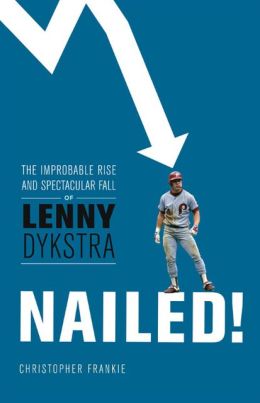
Nailed!

When reading “Nailed!: The Improbable Rise and Spectacular Fall of Lenny Dykstra” by Christopher Frankie, a one-word question bounced through my head: Why?

It’s never easy to work for a boss who is uncompromised and inconsistent, but when that boss was one of your childhood heroes, it becomes even more difficult to leave your position. And this is what Frankie found out in his short-term employment to one of baseball’s most popular players, Lenny Dykstra.

As a centerfielder for the New York Mets and the Philadelphia Phillies, Dykstra brought a combination of intensity and grit to every game he played in. He may not have been the most talented ballplayer, but he got the most out of his abilities through hustle, hard work and as the reader finds out in this book, some PEDs.

When Dykstra left the game, there was no one who thought that he had the brains to enter the working world. Most thought that he’d end up a coach somewhere, living off his name and past glories. However, Dykstra had other ideas; he was going to buy and run upscale carwashes in his native Southern California.

Once those businesses turned a profit, Dykstra sold out and began dumping his money into the stock market—specifically in stocks that he had chosen. According to Frankie, Dykstra spent an entire year immersing himself into the world of high finance and came out with an understanding of that world and a system for choosing stocks. His acumen for picking winners was so great that he began to attract the attention of prominent Wall Street analysts like Jim Cramer.

It’s here where the book picks up as Frankie was hired by Dykstra to work on his columns and newsletters for a financial publishing company. Not only that, but Frankie was given the title of Publisher (despite being in his early 30s at the time) of Dykstra’s new magazine venture. Called “The Player’s Club”, this periodical was aimed at professional athletes and had articles tailored to their lifestyles: when and how to retire, procuring a private jet, preparing for life after the applause ends. It was an ambitious project that definitely filled a niche, but Dykstra was too erratic to make it work and his mini-empire began crashing down on him.

Unfortunately for Frankie, he was part of the collateral damage. Late night phone calls from a barely coherent Dykstra, midnight meetings that lasted until dawn, screaming, caterwauling, charges of blatant racism and sexism were some of the trials that Frankie had to endure. Despite telling everyone that buck stops with him, Frankie alleges that Dykstra never took responsibility for his mistakes, stole money from his employees (when he decided to pay them) and was a general loathsome individual to be around. Midway through his partnership with Dykstra it finally dawned on Frankie that Nails (as Dykstra was known in baseball) maybe wasn’t the right star to attach his wagon.

I had followed this story pretty closely when it broke, so I had a good idea of the things that Dykstra did and the shop that he ran, however “Nailed!” goes into deeper detail about the travesty of working for Mookie Wilson’s former platoon partner.

About mid-way through the story I found myself muttering the one-word question that I referred to in the opening paragraph, “Why?” Why did Frankie stick around this long? Why couldn’t Frankie understand that Dykstra was using him and pretty much everyone he ever came in contact with? Despite dealings with countless people who were burned by Nails in the past, why did Frankie think that it would be different with him?

And to be fair, Frankie does address these questions. It seems that there’s a bit of hindsight spin on his part, but it’s understandable. The basic gist is two-fold: Dykstra owed him a ton of cash (for his work, Frankie never let him borrow his credit card, like other employees) and he felt that he owed the people whom he brought into Dykstra’s operation. On the last point, he didn’t want to leave anyone in this morass of insanity. And to his credit he was able to recoup a portion of his owed wages and help the other two members of the Dykstra staff (which numbered two by the end of the year) to escape with some cash.

The one thing that I found most interesting about this book is that despite Frankie being mistreated and taken advantage over and over again, there is still a shred of him that looks up to Dykstra. Whether it’s the even hand of a good journalist or someone feeling the lingering effects of Stockholm Syndrome, Dykstra isn’t portrayed as someone who is all bad. To me, that would be the biggest difficulty to writing this book and Frankie does a nice job of showing not only the detestable things that Dykstra would do, but also some of the reasons why a person would put up with this crap. Like most con men, Dykstra has a healthy amount of charisma that charm folks that don’t know him very well. It’s only after one has been caught up in the Dykstra web then does the real personality show.

Aside from Dykstra’s Girl Friday, known as Dorothy, is the most compelling character in this passion play. As someone who has been with Nails since the beginning of his business forays, she has seen him at his best and his worst. And despite treatment that borders on violations of Geneva Treaty, she keeps returning to him. She acted as Frankie’s Yoda and helped him navigate through the first few months of Lenny’s insanity.

For his first book, Frankie did a really good job. “Nailed!” was a quick read but at the same time made it impossible to put down. After a few books that didn’t live up to expectations, it was nice to find a tome that not only lived up to its billing but surpassed it. If you’re a fan of baseball, get the book. If you’re interested in just how screwed up our financial climate is and who we listen to in order to get rich, get the book.

You won’t be disappointed.